Showing posts with label Adventure. Show all posts

Thursday, January 18, 2018

Recently Read

The Book of Dust
Vol. 1: La Belle Sauvage
by Philip Pullman

It has been a long time since His Dark Materials first burst onto the literary landscape--so long that, at this remove, it may be difficult for Philip Pullman fans to actually remember everything that went on in the trilogy. Having that background knowledge helps, but is not necessary, if you decide to pick up La Belle Sauvage, the first volume in Pullman's tripartite return to the world of Lyra Belacqua, daemons, and Dust.

However, what may be (somewhat surprisingly) necessary for Pullman's readers to bring to the author's new epic is a fair amount of patience, and a memory of the goodwill he built with them through his earlier, quite spectacular effort.
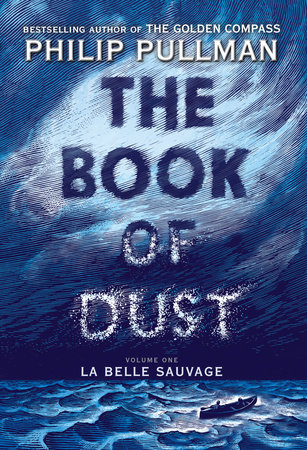
The Book of Dust:
Volume 1--La Belle Sauvage
It is probably worth declaring, right now, that the above sentiment is not meant to dissuade anyone from reading La Belle Sauvage, or to suggest that Pullman's new work is a bad book. In many ways, La Belle Sauvage delivers much of the promise that fans would expect from a new episode of the HDM epic. But, when viewed with the inevitably jaundiced eye that one must bring to a new work that hopes to build upon a previous lofty achievement, it becomes all the more apparent that the mark has in fact been missed, even if the author's new effort came about as close as one could expect it to have.

Partially, the problem Pullman faces with this new volume is self-inflicted, because the early chapters of La Belle Sauvage are a pure pleasure to read, and thus the expectations get raised considerably. It takes but a few pages for fans to be reminded of just how good a prose stylist Pullman is; his talent for a clever turn of phrase remains firmly within his mastery, and one can't help but smile--if not outright laugh--at the author's cleverness as he relates the early pages of his tale. The description of the life of innkeeper's son--and soon to be epic hero--Malcolm Polstead is perfectly charming, witty, vivid in creating a sense of time and place, and full of promise of wonderful things to come. Intrigue arrives quickly, and in no time the reader is off on an adventure that appears certain to provide plenty of excitement, enchantment, and maybe a little danger, too.

The problem arises, oddly enough, once the action of the story finally starts to happen. Most of the early chapters of La Belle Sauvage are composed of scene-setting; much of what goes on is talky and lays the groundwork for the adventure that is about to come.

That description is not a disparagement. Quite the contrary: again, Pullman's penchant for clever turns of phrase, his talent at characterization, and his world-building vision all make the early chapters of the book into something fascinating--and those expectations build as the reader awaits the inevitable payoff of a fully realized saga.

Unfortunately, it doesn't quite work out that way. Once the crisis moment comes, and Malcolm, his partner-antagonist Alice (the dishwasher at his parents' inn), and the infant Lyra make their desperate escape from danger, La Belle Sauvage presents the paradox of a story where the action finally starts...but the narrative somehow slows down. As the three kids follow the Thames through the flooded Oxfordshire landscape and down towards London--pursued all the way by a very dangerous character--Pullman's story bogs down somewhat, despite the characters' literal movement and the high narrative stakes.

What's the problem? Mostly, it seems that the author, having plotted himself into an epic flood, feels compelled to give the disaster a fittingly epic amount of attention. Pullman indulges in a great deal of detailed description of the water-logged Oxfordshire landscape--a patch of earth that is obviously much loved by the author, but is most likely quite unfamiliar to most of his readers, and thus not nearly the object of fascination that Pullman obviously believes it to be.

There are other issues with Malcolm and Alice's odyssey. Pullman uses the trip down the river--really, across a temporary ocean that may as well be an ancient Greek hero's Mediterranean--as the setting for a series of stops along the way, most of which serve as the staging for some supernatural tableaux. Most of these scenes veer past the point of diversion and reach the unwanted shore that is distraction. The reader can only hope that Pullman is setting up something for the new trilogy's future volumes, for there's precious little payoff in these vaguely Homeric episodes.

Problems also spring not just from the narrative's set pieces, but also from the book's characters as well. Daemons, Pullman's unique contribution to fantasy literature--and a clever device for converting internal monologues into actual external dialogue--get strangely inconsistent treatment from the author. Malcolm's daemon Asta is always named and lives as a fully developed character in her own right; meanwhile, Alice's daemon Ben is often obscure, sometimes unnamed, and frequently seemingly forgotten. That, and other, similar, almost lazy treatment of other characters' daemons, can be found throughout the tale--an odd bit of literary clumsiness given Pullman's status as the sire of the device.

As for the human characters themselves, Malcolm and Alice start off as antagonists, then inevitably become allies and friends, and perhaps even more than that--which is odd and a little uncomfortable, given the difference in their stated ages. Malcolm starts the book as an eleven-year-old; Alice is described as "about sixteen." That's a major difference in developmental stages, and makes some of the story's later developments strange and improbable. Indeed, when the final confrontation comes with the book's chief villain, it includes a bit of ugliness that is of questionable necessity to the plot. The affront seems gratuitous, and while the guilty party receives justice, the entire scene stains the proceedings and makes the book's denouement arrive under a disturbing cloud.

Further character problems include the outright disappearance of at least two characters who, based upon the early chapters of the book, seem to be poised to play major roles in the later narrative. They don't. Again, one hopes that further developments are being set up for payoff in future volumes, but there are no guarantees.

So then, is La Belle Sauvage a bad book? No. But it feels very incomplete--more incomplete than even a volume 1 of any trilogy should feel. Unintentionally, perhaps, Pullman has put his readers into a story with stakes about as high as those faced by Malcolm, Alice, and the rest of Lyra's guardians: the high stakes of judging a literary work for its quality, and whether that attribute is great enough to make moving forward with the work's sequels worth one's while. I think there's enough in Volume 1 of The Book of Dust to make a fan anticipate Volume 2...but, as with the kids in La Belle Sauvage, it's a precarious thing, and the escape may be a narrow one. We'll see.

Thursday, December 29, 2016

Reel Reviews

The Three Musketeers -- This is the version from the ‘40s with Gene Kelly as D’Artagnan. The film makes good use of Kelly’s dancing talents; his D’Artagnan is athletic and agile and makes his swordplay sequences a lot of fun to watch. The plot seems to careen wildly all over the place, with a few too many climaxes--but I suspect the filmmakers hewed fairly closely to the source material, so it’s hardly their fault for that. There’s almost a bit too much bonhomie between the Musketeers; sometimes the movie comes across as more parody than comedic adventure, but that’s a minor quibble, as is the fact that it runs just a bit too long. But this is one of those classic, old-style Hollywood adventures that you don’t see much of anymore, so it’s definitely worth a look for that alone.

Tuesday, December 27, 2016

Reel Reviews

The Sea Hawk -- An absolutely standard, straightforward Errol Flynn swashbuckler, like many others, almost to the point of being templated. It’s a fortunate thing, then, that Flynn, director Michael Curtiz, and some familiar cast members all had that template down pat. The movie provides exactly what you expect of a old-time pirate flick, and that means high entertainment. It does run a tad long, with a bit of a dull stretch in the middle, but the payoff is worth it, and it’s ultimately a very satisfying experience.

Friday, April 8, 2016

Reel Reviews

King Solomon's Mines -- (1950, with Stewart Granger and Deborah Kerr.) I often preach about old movies being better than you think they are; this one's not exactly a poster child for that concept. Not to say that it's bad; but the running time largely consists of a pastiche of wildlife encounters--which were probably fascinating back in the day but relatively bland for today's jaded viewer, who's seen all this and better in any number of nature shows--and a story that meanders to an ending with very little payoff. This one's probably only for the film buffs out there.

Sunday, January 31, 2016

Reel Reviews

Star Wars: Episode VII--The Force Awakens -- Those of a cynical mind might view the derivative nature of this outing--it is an almost blow by blow remake of the original 1977 story--as purposeful exploitation of a) an older, captive fanbase audience, and b) a new, younger generation of potential audience members who don't know from the original anyway, and won't be able to recognize the recycling. It is very likely that that cynical view is 100% true, but that does not necessarily toss this film onto the trash heap. The characters old and new are engaging (the newcomers acquit themselves very well), the movie looks beautiful, and at no point did I find my attention wavering during its relatively long running time. Ultimately, one should probably take this installment for what it is: a decent "soft" reboot of the franchise that, perhaps, raises a new hope for better things to come.

Sunday, January 17, 2016

Reel Reviews

The Martian -- This movie has its weaknesses; a large dose of predictability mixed with plenty of moviemaking and story clichés come immediately to mind. But its strengths are very strong, including an excellent cast in top form and an inherently interesting premise. And the film's greatest strength of all may be its most important trait: its high level of intelligence, particularly in its depiction of science not just as an airy concept, but as a practical way to solve problems. If enough people watch this movie, and absorb its scientific frame of mind, it might nudge this world towards being a place that's a little bit better than the ignorant, superstitious madhouse where we currently live.

Sunday, August 16, 2015

Reel Reviews

Interstellar -- I think this movie's heart is in the right place. Director Christopher Nolan has built a lot of equity with previous works, so one might be willing to give him the benefit of the doubt, or at least a pass on certain things. But that also means there's a pretty high level of expectations attached to his projects, and this one does not live up to that hype. I'm not bothered by the predictability of what seems to be an obvious attempt at ginning up a big "shocking twist"; I'm more concerned about the vagueness surrounding much of the film's presentation: the unsteady science (including that one major boner that every screenwriter seems to love, misunderstanding black holes), the characters' odd motivations, even just the set-up for why all this is necessary in the first place. Indeed, the science is so vague in some places that this might be a more honest movie if it were an outright fantasy, with everyone wearing robes and pointed hats and doing magic rather than talking about wormholes. Too much of what may have been intended as atmospheric obscurity simply comes across as intellectual or creative laziness. If you want to shoot something into space in a rocket, make it your lack of willingness to work the problem all the way through.

Wednesday, November 28, 2007

Reel Reviews

Captains Courageous -- Kipling without the raging imperialism. It starts slow, but once the waves start rolling so does the movie. The relationship between Spencer Tracy's poor Portuguese fisherman Manuel (a great, Oscar-winning performance) and Freddie Bartholomew's stranded spoiled brat forms the core of what is ultimately an effective tale. Worth a look. Posted 11/28/07.

Saturday, September 30, 2006

Reel Reviews

Zathura -- Standard issue, mild juvie entertainment, with a half-and-half feel. Some good stuff (nice visuals, some nice character moments, a blissful lack of skateboards), some bad (the kids are a little grating, the usual product placements). Blend it together an you get a decent, though not especially engaging, movie. Kids will probably like it; if you're uncritical, maybe you will too. Posted 9/30/06.

Friday, September 9, 2005

Reel Reviews

Captain Blood -- You've got lots of plot getting in the way of the movie in the beginning, but once it gets rolling, man does it roll! Errol Flynn at his swashbuckling best, in what amounts to the definitive pirate movie. Truly a classic. Posted 9/9/05.