
The Cats of Roxville Station
by Jean Craighead George
It's almost impossible for me to resist anything that has to do with cats. So when I spotted this book at the local Friends of the Library book store, I decided to fork over a couple of bucks and see if I could enjoy a little feline entertainment, in literary form.
Turns out I probably should have stuck to LOL cats on the web.
The Cats of Roxville Station is ostensibly a children's book. It was published by a well-known publisher of children's books (Dutton). It has illustrations like a kid's book. It is short and tells a fictional story. All the earmarks of kid lit are there.
But here's the thing: the author is not really interested in telling a story so much as teaching a lesson about what life is like for feral cats.
Uh-oh. Whenever a kid's book is out to teach you lessons, you should probably run the other way.
It's been a truism throughout my many years of reading children's lit: books that are written to be educational--presumably as well as entertaining--are invariably only marginally educational, and hardly entertaining at all.
So it is with Roxville. The story follows the growth and travails of Rachet, a cat who is abandoned by her family and has to make her way among the hierarchy of feral cats who hang around a village train station and its surrounding neighborhood. In parallel, the text also follows a young boy (also an orphan--see what the author did there?) named Mike as he observes the cats of Roxville, roots for Rachet, and generally conspires in various ways to get his guardian to allow him to adopt his hoped-for cat.
Sounds interesting, right? Well, maybe. In reality, the story reads slow, has little that's particularly compelling to hold the interest, and ultimately just lacks a certain amount of literary punch.
The cats are characters in this story, but not as literary creatures. These are not anthropomorphic, talking animals. The cats are just cats, which means they only contribute to the story through actions, not thoughts, feelings, or any abstract expression thereof. That may be a big reason why this reader, at least, found it very hard to connect to these felines, despite being possessed of a passion for these favorite animals. Feline inscrutability may be fascinating in real life, in your living room--but it comes across as static and uninteresting on the written page.
It's possible that this negative vibe about The Cats of Roxville Station may be the product of expectations, but the author is not off the hook for not meeting the reader's anticipation. Things happen to Mike, and the cats--Rachet in particular, of course--but they rarely rise above the level of ordinary stuff. It is perhaps telling that I am writing this review several months after I finished reading the book. Nothing about the experience was all that compelling. I'm mostly producing this write-up just to get the book off my desk.
Overall, it's not a bad book--it's just not a particularly interesting book. And that's a hard idea to wrap one's mind around if you're as crazy about cats as I am. (And no, this feeling is not the product of my being an adult reading a child's book; even a kid's book, if well-written, should produce a certain amount of fascination and delight in an older reader.) I wouldn't necessarily recommend throwing The Cats of Roxville Station out with the litter, but I don't recommend rushing out to the library to pick up a copy of it, either.
Showing posts with label Animals. Show all posts
Showing posts with label Animals. Show all posts
Thursday, May 24, 2018

Sunday, January 7, 2018
Recently Read
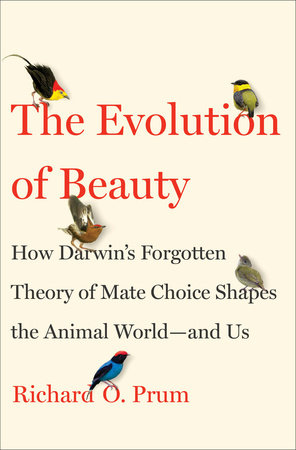
The Evolution of Beauty
by Richard O. Prum
Whenever we wish to answer any question about the natural world, and we're in doubt about it, we usually turn to Darwin. Except, that is, when it comes to the question of beauty and how it exists in the world, according to Yale professor Richard Prum. The rejection of Darwin's ideas about sexual selection--as opposed to his theory of natural selection--by the bulk of evolutionary scientists serves as the inspiration for Prum's The Evolution of Beauty, a book written as a methodical (and methodological) counterpoint to the field's slavish devotion to adaptation as the answer to everything.
Prum makes it clear that he does not wish to reject the notion of adaptive mate choice--the evolutionary mechanism that is scientists' preferred answer for why animals evolve in every given way--but simply wishes to reassert an arbitrary character to certain processes that lead to many of the extraordinary forms and behaviors displayed by animals and humans.
Yes, humans, too. We're animals of a sort, and one of the great legacies of Darwin's investigation of evolution was to pull modern human beings out of their Ptolemaic universe, where we viewed ourselves as a special creation that lived in the center of the universe, near to but separated from the rest of the animal kingdom, and into a more scientific and realistic conception of ourselves as being the products of an expansive Tree of Life--animals along with all the rest of this planet's occupants, and sharing many similar characteristics, right down to our genes.
Thus, if you're the type who likes to spend weekends hanging out at the Creationist Museum, this book is probably not for you.
If, however, you have an open mind--especially a mind more open than most of today's current crop of evolutionary scientists, according to Prum--then you're likely to profit from reading The Evolution of Beauty, particularly if you have long pondered the signficance of the differences we see among creatures in the world around us--including the creatures we see at the mall, the grocery store, and the office.
Frankly, the idea that much of the organic world's existence is governed by a notion of aesthetic mate choice--that is, mates are chosen not simply for their Darwinian "fitness," but also for how aesthetically pleasing they are to other members of their species--seems like something fairly obvious. This observer has long understood (to his own personal detriment) how "the birds with the brightest plumage are the ones who get the mates." It seems like a strain to deny that being beautiful works heavily to a creature's advantage, be that creature a Great Argus pheasant, a breed of dog, or a USC cheerleader.
Yet, according to Prum, that has largely been the case within the field of evolutionary science, where the out-sized influence of Alfred Russell Wallace (the co-discoverer with Darwin of natural selection) has worked for over a hundred years to champion the primacy of all-powerful adaptation as the cause of all evolutionary change.
As Prum establishes in his book's early chapters, the turn away from Darwin's theory of aesthetic mate choice as a key component of sexual selection was largely driven by Wallace's personal animus, along with hearty doses of Victorian-era primness, particularly with regards to female sexual autonomy. The implications of "this aesthetic view of life"--as Prum puts it, echoing Darwin's famous closing to Origin of Species--were a little too risque if not revolutionary for the staid world in which the famous naturalist first proposed them, and biological sciences clung to adaptation as a shield against any nervous-making ideas interfering with their solidly orderly and reasonable view of how animals evolve.
But now, in the 21st century--where primness is an idea that has dissolved and the culture has moved well beyond the boundary of quaintness--along comes Prum, an ornithologist who has taken a lifetime of observing birds and their mating rituals and identified behaviors and physical characteristics that simply can't be explained by mere adaptation, or "honest advertising" of physical superiority, as the adaptationist creed would have you believe.
Thus, most of the first half of The Evolution of Beauty presents Prum's examples from the field, where his observations--literally, his bird-watching excursions--of Great Argus pheasants, various species of Manakins and Bowerbirds, and other exotic avians introduced him to behaviors and traits that defy classification as advertisements of an individual bird's fitness. Prum explains how, in most of the species studied, female mate choice served as the engine for creating adjustments to the males who were seeking mates, either through changes in appearance or in behavior, that are not only not adaptive in nature, but in some instances can be considered maladaptive, at least from an individual's point of view. (The mating displays of male Manakins--where multiple males show coordinated behaviors that assure certain birds lose out on breeding opportunities--are particularly effective evidence.) The chapter on duck sex presents a surprisingly dramatic scenario that makes a sound case for just how strong--and urgent--is the female drive to adapt in order to preserve their sexual freedom--a freedom of choice that insists upon being able to preserve a hen's desire to mate with the drake who is most appealing to her.
Later in the book, Prum tackles how aesthetic mate choice works in the human species, from our divergence with our ape cousins all the way through to the rise of homosexuality as an open human sexual phenomenon in these later days (at least as a question of sexual identity, if not the more ancient mechanics of the thing). Subjects tackled in these later chapters are as colorful as the human male's lack of a baculum (penis bone) and the utility of female orgasms (maybe there isn't any, besides the fact that it feels good) to the sobering reality that many of the by-products of human aesthetic mate choice (by women) serve the purpose of nullifying "traditions" of sexual coercion and violence. It's a rich tapestry for sure, and bound to be of interest to anyone with an interest in human sexual dynamics--which is to say, everyone.
Prum's treatment of his subject is scholarly, but that doesn't mean it's too opaque for the average reader to comprehend. The professor doesn't dumb things down; he keeps his reporting as straightforward and clear as possible to serve the purpose of reaching, and influencing, a broad audience. So, too, does his writing style; Prum injects a healthy amount of humor and even pop culture references into his text, which certainly helps to lubricate the nonscientist's understanding of the subjects being discussed. For a work as intelligent and dense as The Evolution of Beauty, the book is in fact a relatively easy and enjoyable read. The author's only real misstep comes in his closing chapter, where he presents as a thematic anchor a gross misinterpretation of an old Greek aphorism, which then serves to undermine his closing argument. Other than that one fault, Prum's presentation is lucid, well-argued, and hard to refute.
So, then, does The Evolution of Beauty triumph in beating back the adaptationists' claims to universality? Yes, I think so, at least as far as the notion of the ubiquitous and unchangeable power of adaptive mate choice is concerned. There's too much here that argues too strongly in favor of that "aesthetic view of life" for all the eggs to be placed in the adaptive basket. But some of Prum's conclusions--"intellectual offerings" may be a more accurate description--remain highly speculative and are (by the author's own admission) still wanting in evidence to be claimed as fact. Overall, the case for aesthetic mate choice is strong, but, as the Scots might say, "not proven."
Still, The Evolution of Beauty is a welcome addition to the scientific bookshelf. Science only progresses--indeed, only happens--when questions are asked, particularly questions that challenge entrenched dogmas. Prum had done more than enough with this volume to raise important questions and set the course for the next generation of evolutionary biologists to find the proof for these ideas.
by Richard O. Prum
Whenever we wish to answer any question about the natural world, and we're in doubt about it, we usually turn to Darwin. Except, that is, when it comes to the question of beauty and how it exists in the world, according to Yale professor Richard Prum. The rejection of Darwin's ideas about sexual selection--as opposed to his theory of natural selection--by the bulk of evolutionary scientists serves as the inspiration for Prum's The Evolution of Beauty, a book written as a methodical (and methodological) counterpoint to the field's slavish devotion to adaptation as the answer to everything.
Prum makes it clear that he does not wish to reject the notion of adaptive mate choice--the evolutionary mechanism that is scientists' preferred answer for why animals evolve in every given way--but simply wishes to reassert an arbitrary character to certain processes that lead to many of the extraordinary forms and behaviors displayed by animals and humans.
 |
| The Evolution of Beauty by Richard O. Prum |
Thus, if you're the type who likes to spend weekends hanging out at the Creationist Museum, this book is probably not for you.
If, however, you have an open mind--especially a mind more open than most of today's current crop of evolutionary scientists, according to Prum--then you're likely to profit from reading The Evolution of Beauty, particularly if you have long pondered the signficance of the differences we see among creatures in the world around us--including the creatures we see at the mall, the grocery store, and the office.
Frankly, the idea that much of the organic world's existence is governed by a notion of aesthetic mate choice--that is, mates are chosen not simply for their Darwinian "fitness," but also for how aesthetically pleasing they are to other members of their species--seems like something fairly obvious. This observer has long understood (to his own personal detriment) how "the birds with the brightest plumage are the ones who get the mates." It seems like a strain to deny that being beautiful works heavily to a creature's advantage, be that creature a Great Argus pheasant, a breed of dog, or a USC cheerleader.
Yet, according to Prum, that has largely been the case within the field of evolutionary science, where the out-sized influence of Alfred Russell Wallace (the co-discoverer with Darwin of natural selection) has worked for over a hundred years to champion the primacy of all-powerful adaptation as the cause of all evolutionary change.
As Prum establishes in his book's early chapters, the turn away from Darwin's theory of aesthetic mate choice as a key component of sexual selection was largely driven by Wallace's personal animus, along with hearty doses of Victorian-era primness, particularly with regards to female sexual autonomy. The implications of "this aesthetic view of life"--as Prum puts it, echoing Darwin's famous closing to Origin of Species--were a little too risque if not revolutionary for the staid world in which the famous naturalist first proposed them, and biological sciences clung to adaptation as a shield against any nervous-making ideas interfering with their solidly orderly and reasonable view of how animals evolve.
But now, in the 21st century--where primness is an idea that has dissolved and the culture has moved well beyond the boundary of quaintness--along comes Prum, an ornithologist who has taken a lifetime of observing birds and their mating rituals and identified behaviors and physical characteristics that simply can't be explained by mere adaptation, or "honest advertising" of physical superiority, as the adaptationist creed would have you believe.
Thus, most of the first half of The Evolution of Beauty presents Prum's examples from the field, where his observations--literally, his bird-watching excursions--of Great Argus pheasants, various species of Manakins and Bowerbirds, and other exotic avians introduced him to behaviors and traits that defy classification as advertisements of an individual bird's fitness. Prum explains how, in most of the species studied, female mate choice served as the engine for creating adjustments to the males who were seeking mates, either through changes in appearance or in behavior, that are not only not adaptive in nature, but in some instances can be considered maladaptive, at least from an individual's point of view. (The mating displays of male Manakins--where multiple males show coordinated behaviors that assure certain birds lose out on breeding opportunities--are particularly effective evidence.) The chapter on duck sex presents a surprisingly dramatic scenario that makes a sound case for just how strong--and urgent--is the female drive to adapt in order to preserve their sexual freedom--a freedom of choice that insists upon being able to preserve a hen's desire to mate with the drake who is most appealing to her.
Later in the book, Prum tackles how aesthetic mate choice works in the human species, from our divergence with our ape cousins all the way through to the rise of homosexuality as an open human sexual phenomenon in these later days (at least as a question of sexual identity, if not the more ancient mechanics of the thing). Subjects tackled in these later chapters are as colorful as the human male's lack of a baculum (penis bone) and the utility of female orgasms (maybe there isn't any, besides the fact that it feels good) to the sobering reality that many of the by-products of human aesthetic mate choice (by women) serve the purpose of nullifying "traditions" of sexual coercion and violence. It's a rich tapestry for sure, and bound to be of interest to anyone with an interest in human sexual dynamics--which is to say, everyone.
Prum's treatment of his subject is scholarly, but that doesn't mean it's too opaque for the average reader to comprehend. The professor doesn't dumb things down; he keeps his reporting as straightforward and clear as possible to serve the purpose of reaching, and influencing, a broad audience. So, too, does his writing style; Prum injects a healthy amount of humor and even pop culture references into his text, which certainly helps to lubricate the nonscientist's understanding of the subjects being discussed. For a work as intelligent and dense as The Evolution of Beauty, the book is in fact a relatively easy and enjoyable read. The author's only real misstep comes in his closing chapter, where he presents as a thematic anchor a gross misinterpretation of an old Greek aphorism, which then serves to undermine his closing argument. Other than that one fault, Prum's presentation is lucid, well-argued, and hard to refute.
So, then, does The Evolution of Beauty triumph in beating back the adaptationists' claims to universality? Yes, I think so, at least as far as the notion of the ubiquitous and unchangeable power of adaptive mate choice is concerned. There's too much here that argues too strongly in favor of that "aesthetic view of life" for all the eggs to be placed in the adaptive basket. But some of Prum's conclusions--"intellectual offerings" may be a more accurate description--remain highly speculative and are (by the author's own admission) still wanting in evidence to be claimed as fact. Overall, the case for aesthetic mate choice is strong, but, as the Scots might say, "not proven."
Still, The Evolution of Beauty is a welcome addition to the scientific bookshelf. Science only progresses--indeed, only happens--when questions are asked, particularly questions that challenge entrenched dogmas. Prum had done more than enough with this volume to raise important questions and set the course for the next generation of evolutionary biologists to find the proof for these ideas.
Saturday, September 23, 2017
Recently Read
Call of the Cats
by Andrew Bloomfield
There are two possible takeaways from reading Andrew Bloomfield's Call of the Cats: What I learned about Life and Love from a Feral Colony.
One is that Bloomfield is an uncommonly dedicated animal lover, one who devoted a huge part of his life to taking care of a group of backyard cats for little more than the intangible rewards of good deeds done (and maybe, perhaps, a decent writing contract).
The other potential takeaway is that Bloomfield confirms many observers' perceptions of cat people as weird, off-center, and perhaps more than a little crazy.
The latter notion comes through to the reader less by way of the author's interaction with the cats in his neighborhood's large feral colony and more through what Bloomfield reveals about himself in the process of telling his story. In various diversions, Bloomfield discusses his time in Nepal, his on-again, off-again work as an astrologer, his spectacularly unsuccessful career as a day trader, his time as a dealer in rare Asian artworks...in short, Bloomfield relates the story of a peripatetic working life in which he apparently did everything except hold a normal job. The implication--no normal job because he's no normal person--seems clear, and certainly reinforces the notion that someone who would dedicate himself so vigorously to taking care of a group of cats--who often feel substantially less care for him--is probably a bit of a misfit, at least as far as the general rules of society go.
Nothing particularly revealing there. Those of us who love cats, in general, would have no problem with characterizing ourselves as misfits. In this world, dog owners are clearly deemed to be the normal people; they fit in, and one could even say they come across as quite satisfied with themselves. No such comfort exists for cat lovers, particularly those who really love cats. Bloomfield, apparently, qualifies on all counts there.
If you can get past the author's eccentricity, you do get an interesting and informative portrait of just how difficult it can be to handle--literally and figuratively--a colony of feral cats. The stories range from heartening--tales of this or that cat's recovery from a seemingly fatal illness--to heartbreaking--the devastation wreaked upon the colony, and particularly its kitten population, by the local predator population (coyotes, raccoons, opossums). It ain't easy living out there in the spaces in between, and it can be a harrowing experience if you're trying to help the cats who have settled into those spaces. That message shines through in Bloomfield's writing, at least as strongly as the characterization of the author himself does.
If there's any problem with Call of the Cats, it's mostly from a sense that the tale told in the book is comprised of many disjointed segments; a sense of flowing narrative rarely comes out of these pages. (Bloomfield's personal diversions do as much harm to that sense of flow as they do to his chance of being perceived as normal.) Also, the cast of feline characters grows too large at certain points for the casual, not-entirely-attentive reader to keep straight. The reader winds up feeling muddled in more than one stretch of the book's length.
But it's hard for a cat lover to make too negative an assessment of a book like this, and for an author who clearly exposes a deep and abiding love for the subjects of his literary inspiration. Those of us who deem ourselves to be true feline friends will find more than enough pleasure from Call of the Cats. And even the dog people among us, if they're feeling charitable towards their eccentric neighbors--and can get past feeling so satisfied with themselves--might get a bit of joy out of this very cat-centric book, too. It's certainly worth picking it up and giving it a try.
by Andrew Bloomfield
There are two possible takeaways from reading Andrew Bloomfield's Call of the Cats: What I learned about Life and Love from a Feral Colony.
One is that Bloomfield is an uncommonly dedicated animal lover, one who devoted a huge part of his life to taking care of a group of backyard cats for little more than the intangible rewards of good deeds done (and maybe, perhaps, a decent writing contract).
The other potential takeaway is that Bloomfield confirms many observers' perceptions of cat people as weird, off-center, and perhaps more than a little crazy.
 |
| Andrew Bloomfield's Call of the Cats |
Nothing particularly revealing there. Those of us who love cats, in general, would have no problem with characterizing ourselves as misfits. In this world, dog owners are clearly deemed to be the normal people; they fit in, and one could even say they come across as quite satisfied with themselves. No such comfort exists for cat lovers, particularly those who really love cats. Bloomfield, apparently, qualifies on all counts there.
If you can get past the author's eccentricity, you do get an interesting and informative portrait of just how difficult it can be to handle--literally and figuratively--a colony of feral cats. The stories range from heartening--tales of this or that cat's recovery from a seemingly fatal illness--to heartbreaking--the devastation wreaked upon the colony, and particularly its kitten population, by the local predator population (coyotes, raccoons, opossums). It ain't easy living out there in the spaces in between, and it can be a harrowing experience if you're trying to help the cats who have settled into those spaces. That message shines through in Bloomfield's writing, at least as strongly as the characterization of the author himself does.
If there's any problem with Call of the Cats, it's mostly from a sense that the tale told in the book is comprised of many disjointed segments; a sense of flowing narrative rarely comes out of these pages. (Bloomfield's personal diversions do as much harm to that sense of flow as they do to his chance of being perceived as normal.) Also, the cast of feline characters grows too large at certain points for the casual, not-entirely-attentive reader to keep straight. The reader winds up feeling muddled in more than one stretch of the book's length.
But it's hard for a cat lover to make too negative an assessment of a book like this, and for an author who clearly exposes a deep and abiding love for the subjects of his literary inspiration. Those of us who deem ourselves to be true feline friends will find more than enough pleasure from Call of the Cats. And even the dog people among us, if they're feeling charitable towards their eccentric neighbors--and can get past feeling so satisfied with themselves--might get a bit of joy out of this very cat-centric book, too. It's certainly worth picking it up and giving it a try.
Wednesday, August 19, 2015
Recently Read
Puss in Boots
by Philip Pullman / Ian Beck, illus.
I'm not impressed.
It's been a long time since Philip Pullman made a splash with His Dark Materials and its associated works. It has been nearly as long as Pullman gave his readers other great pieces of work, such as Clockwork and The Scarecrow and His Servant. Given the span of time that has passed since the author last wowed us, maybe it's time to reclassify Pullman, not as a star but as a comet--a body that shone brightly for a while, but eventually disappeared from the literary sky, perhaps never to return again.
It's not that this version of Puss in Boots is bad; Pullman does a serviceable job of presenting the traditional story; there are no passages in his tale that make the reader want to throw the book across the room or anything like that. But Pullman expands upon Charles Perrault's tale, including scenes with a hermit and some ghouls which, frankly, don't particularly add anything special to the story.
by Philip Pullman / Ian Beck, illus.
I'm not impressed.
It's been a long time since Philip Pullman made a splash with His Dark Materials and its associated works. It has been nearly as long as Pullman gave his readers other great pieces of work, such as Clockwork and The Scarecrow and His Servant. Given the span of time that has passed since the author last wowed us, maybe it's time to reclassify Pullman, not as a star but as a comet--a body that shone brightly for a while, but eventually disappeared from the literary sky, perhaps never to return again.
It's not that this version of Puss in Boots is bad; Pullman does a serviceable job of presenting the traditional story; there are no passages in his tale that make the reader want to throw the book across the room or anything like that. But Pullman expands upon Charles Perrault's tale, including scenes with a hermit and some ghouls which, frankly, don't particularly add anything special to the story.
Friday, August 14, 2015
Recently Read
The Good, the Bad, and the Furry
by Tom Cox
There's a downside to being cat crazy. Actually, there are a lot of downsides to being any kind of crazy; but right now I'm just focused on the cat crazy part. A downside of being cat crazy is that you can't just pass by anything cat related, even when you just happen to spot that something out of the corner of your eye. Sometimes that impulse can lead you seriously astray.
Case in point: The Good, the Bad, and the Furry by English author Tom Cox. I just happened to spot this book on the New Releases shelf at my local library, and felt compelled to grab it and take it home with me. That result probably owes a lot to the picture on the cover, which shows Cox's cat The Bear soulfully staring out at all who pass by, just begging cat crazy people like yours truly to pick up the book and take it home to read--a process not unlike adoptions at the local Petco.
by Tom Cox
There's a downside to being cat crazy. Actually, there are a lot of downsides to being any kind of crazy; but right now I'm just focused on the cat crazy part. A downside of being cat crazy is that you can't just pass by anything cat related, even when you just happen to spot that something out of the corner of your eye. Sometimes that impulse can lead you seriously astray.
Case in point: The Good, the Bad, and the Furry by English author Tom Cox. I just happened to spot this book on the New Releases shelf at my local library, and felt compelled to grab it and take it home with me. That result probably owes a lot to the picture on the cover, which shows Cox's cat The Bear soulfully staring out at all who pass by, just begging cat crazy people like yours truly to pick up the book and take it home to read--a process not unlike adoptions at the local Petco.
Sunday, April 26, 2015
Reel Reviews
Rise of the Planet of the Apes -- The movie is much like the featured primates: it starts off quite stupid, then it gets a boost midway through and starts looking smarter. It's hard to resist rolling one's eyes at the early parts of the film, especially the very paint-by-numbers plot points about corporate greed being the root of the evil (not that it doesn't ring true; it's just not very well presented here). There's also some character inconsistency that comes across as false and jarring as the story progresses; ironically, it's mostly the apes who stay true to character. And then you get plenty of good monkey mayhem towards the end. Satisfying, but definitely in the "leaves room for improvement" category.
Wednesday, August 20, 2014
Accomplishment
 |
| Chicken Soup for the Soul: The Cat Did What? |
The story tells the tale of the one and only time we tried to give our first cat, WT, a bath, and how that led to me winding up in the emergency room at the local hospital. A good story, if I may say so myself, and it is a sincere tribute to my dearly departed kitty and the legacy that she left in my life.
I had to wait a whole year from submission to today, when the book finally hit the stores. I did get 10 author's copies (all gone now, save one I kept for myself) for free, so that's another good thing about it. I haven't read any of the stories other than my own (so far I've been too busy) but I'm guessing that they're probably all quite entertaining and worth a read.
Better yet, this won't be the only thing I get published this year. Another story, "Giving Thanks for the Big Birds," is scheduled to appear in the November issue of the magazine Watching Backyard Birds. I get a year's subscription to that periodical, no money for publication, but it is another credit, and hopefully will help grease the skids towards more writings of mine gaining acceptance with paying publications. (I currently have drafts of two pieces written right now, with the concepts for two others worked out in my head and partially written up in notes.)
So things be movin'. Let's hope I can sustain the momentum for a while longer. Like, say, the rest of my life. Excelsior.
Tuesday, December 3, 2013
Recently Read
Cat Sense
by John Bradshaw
It’s not exactly a mystery: cats are a mystery. Perhaps no animal is so beguiling in its actions, its sense of itself, its mere way of being, as the domesticated cat. And all that enigma wrapped in riddle surrounded by puzzle invariably leads interested parties to both write books about cats and read books about them. No surprise, then, that this cat fancier found his way to the pages of Cat Sense, the recent exploration of all things feline by researcher John Bradshaw.
The book’s subtitle--How the New Feline Science Can Make You a Better Friend to Your Pet--makes multiple promises, which the text comes close to delivering. Bradshaw reports on any number of cat related phenomena using data derived from fairly rigorous scientific research; so the “new feline science” part rings quite true. That stuff about making you a better friend to your cat? Well...maybe. That may depend less upon the information presented, and more upon how you use that information--and even then it may be a dodgy proposition.
by John Bradshaw
 |
| Cat Sense by John Bradshaw |
The book’s subtitle--How the New Feline Science Can Make You a Better Friend to Your Pet--makes multiple promises, which the text comes close to delivering. Bradshaw reports on any number of cat related phenomena using data derived from fairly rigorous scientific research; so the “new feline science” part rings quite true. That stuff about making you a better friend to your cat? Well...maybe. That may depend less upon the information presented, and more upon how you use that information--and even then it may be a dodgy proposition.
Monday, July 23, 2012
Recently Read
The Character of Cats
by Stephen Budiansky
Cats sure do have character. Cats sure are characters. The question is, how much does author Stephen Budiansky reveal, which we don't already know, about that subject in his book, The Character of Cats? The best answer I can give you is, some.
Budiansky's work reads as a natural history of the domesticated cat, covering well-worn topics such as the origin of their partnership with humans in ancient Egypt and their supposed vilification in medieval Europe; vaguely familiar ground (to cat enthusiasts) such as the feline's natural inclinations towards loner living and territoriality; and all the way through to information on more obscure items (in some cases, through new and recent scholarship) such as cat learning ability and the range of personalities found in the population of domestic kitties.
In some of these cases, the author's assertions are challenging and provocative. For example, Budiansky reports on new thinking about the domestication process that brought formerly wild animals--including cats--into the human realm, ideas that turn the traditional view on its head. Cats have long been seen as "the only animal to have domesticated itself," whereas the rest of the farmyard crew came to their lots in life via a conscious process of subjugation by humans. However, Budiansky calls on recent scientific studies and makes the opposite claim: it was cats who were purposely domesticated (or at least semi-domesticated) by people, while other animal species took the yoke upon themselves as a response to "evolutionary trouble" (meaning loss of habitat, dwindling numbers, etc.).
It's an intriguing claim--but are we sure it's true? Budiansky's argues persuasively from observed experiments, but should we really conclude that everyone who thought about this topic prior to now just got it all wrong? And not just wrong, but completely backwards? If this is the first book of natural history you've ever read, you may be inclined to swallow the argument whole and just move on. But if your experience with the field includes more than these pages, you've certainly encountered exactly this sort of dynamic before: a back and forth set of points and counterpoints around a bone of contention that is not made crystal clear by the biological, genetic, or paleontological evidence. Think of the dinosaurs and their extinction--there are still holdouts who do not accept the asteroid theory and argue for other suspects in that particular whodunit. If experts are themselves uncertain about these matters, how can humble lay readers such as ourselves come down on one side or the other?
Cats, of course, are beguiling in many ways, and lend themselves quite well to this sort of uncertainty. Take, as another example, the state of their vision. Are cats colorblind? They were long thought to be so. And then some observers made claims that cats can and do see color. Now, Budiansky weighs in on the side of feline colorblindness, citing experimental results and the physical structures in cats' eyes (cones and rods), to back up his position. But is that the last word on the matter? How many more times will we see new claims made, on both sides of this issue, in the future?
Thus, the reader must take what he reads in The Character of Cats with a grain of salt--at least where his own direct observations can not confirm or deny the author's assertions. Still, Budiansky's views on our favorite furry friends provide some value. Later sections of the book, dealing with cat psychology and learning potential, should be read by anyone with a serious interest in the health and well-being of cats. In particular, getting a handle on how cats see the world--and thus how they can taught positive behaviors and cajoled away from destructive antics--can be of particular value to anyone sharing territory with a kitty (or more than one).
Lastly, Budiansky brings a solid writing style to the pages in The Character of Cats. The reader may learn a thing or two about cats, but that does not mean he's in for a scholarly slog. The tone of the text remains light and readable through most of its length. The casually interested, as well as the hardcore cat fan, can get through this slim volume without any problems.
In sum, The Character of Cats passes the test. If you'd like to add a few good nuggets of information to your pool of knowledge about our fabulous feline friends, this book is worth your time.
by Stephen Budiansky
Cats sure do have character. Cats sure are characters. The question is, how much does author Stephen Budiansky reveal, which we don't already know, about that subject in his book, The Character of Cats? The best answer I can give you is, some.
 |
| The Character of Cats by Stephen Budiansky |
In some of these cases, the author's assertions are challenging and provocative. For example, Budiansky reports on new thinking about the domestication process that brought formerly wild animals--including cats--into the human realm, ideas that turn the traditional view on its head. Cats have long been seen as "the only animal to have domesticated itself," whereas the rest of the farmyard crew came to their lots in life via a conscious process of subjugation by humans. However, Budiansky calls on recent scientific studies and makes the opposite claim: it was cats who were purposely domesticated (or at least semi-domesticated) by people, while other animal species took the yoke upon themselves as a response to "evolutionary trouble" (meaning loss of habitat, dwindling numbers, etc.).
It's an intriguing claim--but are we sure it's true? Budiansky's argues persuasively from observed experiments, but should we really conclude that everyone who thought about this topic prior to now just got it all wrong? And not just wrong, but completely backwards? If this is the first book of natural history you've ever read, you may be inclined to swallow the argument whole and just move on. But if your experience with the field includes more than these pages, you've certainly encountered exactly this sort of dynamic before: a back and forth set of points and counterpoints around a bone of contention that is not made crystal clear by the biological, genetic, or paleontological evidence. Think of the dinosaurs and their extinction--there are still holdouts who do not accept the asteroid theory and argue for other suspects in that particular whodunit. If experts are themselves uncertain about these matters, how can humble lay readers such as ourselves come down on one side or the other?
Cats, of course, are beguiling in many ways, and lend themselves quite well to this sort of uncertainty. Take, as another example, the state of their vision. Are cats colorblind? They were long thought to be so. And then some observers made claims that cats can and do see color. Now, Budiansky weighs in on the side of feline colorblindness, citing experimental results and the physical structures in cats' eyes (cones and rods), to back up his position. But is that the last word on the matter? How many more times will we see new claims made, on both sides of this issue, in the future?
Thus, the reader must take what he reads in The Character of Cats with a grain of salt--at least where his own direct observations can not confirm or deny the author's assertions. Still, Budiansky's views on our favorite furry friends provide some value. Later sections of the book, dealing with cat psychology and learning potential, should be read by anyone with a serious interest in the health and well-being of cats. In particular, getting a handle on how cats see the world--and thus how they can taught positive behaviors and cajoled away from destructive antics--can be of particular value to anyone sharing territory with a kitty (or more than one).
Lastly, Budiansky brings a solid writing style to the pages in The Character of Cats. The reader may learn a thing or two about cats, but that does not mean he's in for a scholarly slog. The tone of the text remains light and readable through most of its length. The casually interested, as well as the hardcore cat fan, can get through this slim volume without any problems.
In sum, The Character of Cats passes the test. If you'd like to add a few good nuggets of information to your pool of knowledge about our fabulous feline friends, this book is worth your time.
Thursday, December 15, 2011
Calls of the Wild
 |
| The children of the night... such music they make. (Photo courtesy wikipedia.org) |
This is not exactly new to me; I heard the coyotes howling plenty of times during my residence at my apartment in nearby Lafayette. But these late episodes bring something special to the scene: a certain wonderfully ominous character to them that strikes my ironic funny bone in a most peculiar way.
You see, it's basically winter out there (not by the calendar, but for the Bay Area, this is pretty much it as far as that season goes). And you have all these old people holed up in their boxy little apartments, while outside a band of mini-wolves is howling at the door. It's like a theater in the round version of a very odd Russian play. Next thing you know an army will march through and seize everyone's grain.
Yeah, I know it's not much, but in these trying times I have to amuse myself with what I've got. Check back in next week when I'll be house-sitting and enjoying more leisure time with myself for something more entertaining.
Subscribe to:
Posts (Atom)


 Posts
Posts


