Showing posts with label Science. Show all posts

Sunday, January 7, 2018

Recently Read

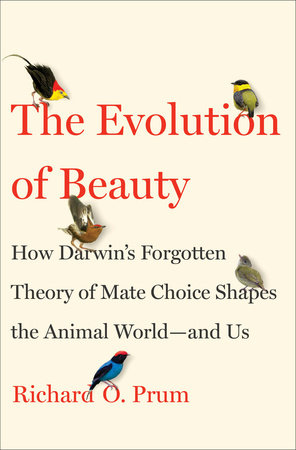
The Evolution of Beauty
by Richard O. Prum

Whenever we wish to answer any question about the natural world, and we're in doubt about it, we usually turn to Darwin. Except, that is, when it comes to the question of beauty and how it exists in the world, according to Yale professor Richard Prum. The rejection of Darwin's ideas about sexual selection--as opposed to his theory of natural selection--by the bulk of evolutionary scientists serves as the inspiration for Prum's The Evolution of Beauty, a book written as a methodical (and methodological) counterpoint to the field's slavish devotion to adaptation as the answer to everything.

Prum makes it clear that he does not wish to reject the notion of adaptive mate choice--the evolutionary mechanism that is scientists' preferred answer for why animals evolve in every given way--but simply wishes to reassert an arbitrary character to certain processes that lead to many of the extraordinary forms and behaviors displayed by animals and humans.
The Evolution of Beauty
by Richard O. Prum
Yes, humans, too. We're animals of a sort, and one of the great legacies of Darwin's investigation of evolution was to pull modern human beings out of their Ptolemaic universe, where we viewed ourselves as a special creation that lived in the center of the universe, near to but separated from the rest of the animal kingdom, and into a more scientific and realistic conception of ourselves as being the products of an expansive Tree of Life--animals along with all the rest of this planet's occupants, and sharing many similar characteristics, right down to our genes.

Thus, if you're the type who likes to spend weekends hanging out at the Creationist Museum, this book is probably not for you.

If, however, you have an open mind--especially a mind more open than most of today's current crop of evolutionary scientists, according to Prum--then you're likely to profit from reading The Evolution of Beauty, particularly if you have long pondered the signficance of the differences we see among creatures in the world around us--including the creatures we see at the mall, the grocery store, and the office.

Frankly, the idea that much of the organic world's existence is governed by a notion of aesthetic mate choice--that is, mates are chosen not simply for their Darwinian "fitness," but also for how aesthetically pleasing they are to other members of their species--seems like something fairly obvious. This observer has long understood (to his own personal detriment) how "the birds with the brightest plumage are the ones who get the mates." It seems like a strain to deny that being beautiful works heavily to a creature's advantage, be that creature a Great Argus pheasant, a breed of dog, or a USC cheerleader.

Yet, according to Prum, that has largely been the case within the field of evolutionary science, where the out-sized influence of Alfred Russell Wallace (the co-discoverer with Darwin of natural selection) has worked for over a hundred years to champion the primacy of all-powerful adaptation as the cause of all evolutionary change.

As Prum establishes in his book's early chapters, the turn away from Darwin's theory of aesthetic mate choice as a key component of sexual selection was largely driven by Wallace's personal animus, along with hearty doses of Victorian-era primness, particularly with regards to female sexual autonomy. The implications of "this aesthetic view of life"--as Prum puts it, echoing Darwin's famous closing to Origin of Species--were a little too risque if not revolutionary for the staid world in which the famous naturalist first proposed them, and biological sciences clung to adaptation as a shield against any nervous-making ideas interfering with their solidly orderly and reasonable view of how animals evolve.

But now, in the 21st century--where primness is an idea that has dissolved and the culture has moved well beyond the boundary of quaintness--along comes Prum, an ornithologist who has taken a lifetime of observing birds and their mating rituals and identified behaviors and physical characteristics that simply can't be explained by mere adaptation, or "honest advertising" of physical superiority, as the adaptationist creed would have you believe.

Thus, most of the first half of The Evolution of Beauty presents Prum's examples from the field, where his observations--literally, his bird-watching excursions--of Great Argus pheasants, various species of Manakins and Bowerbirds, and other exotic avians introduced him to behaviors and traits that defy classification as advertisements of an individual bird's fitness. Prum explains how, in most of the species studied, female mate choice served as the engine for creating adjustments to the males who were seeking mates, either through changes in appearance or in behavior, that are not only not adaptive in nature, but in some instances can be considered maladaptive, at least from an individual's point of view. (The mating displays of male Manakins--where multiple males show coordinated behaviors that assure certain birds lose out on breeding opportunities--are particularly effective evidence.) The chapter on duck sex presents a surprisingly dramatic scenario that makes a sound case for just how strong--and urgent--is the female drive to adapt in order to preserve their sexual freedom--a freedom of choice that insists upon being able to preserve a hen's desire to mate with the drake who is most appealing to her.

Later in the book, Prum tackles how aesthetic mate choice works in the human species, from our divergence with our ape cousins all the way through to the rise of homosexuality as an open human sexual phenomenon in these later days (at least as a question of sexual identity, if not the more ancient mechanics of the thing). Subjects tackled in these later chapters are as colorful as the human male's lack of a baculum (penis bone) and the utility of female orgasms (maybe there isn't any, besides the fact that it feels good) to the sobering reality that many of the by-products of human aesthetic mate choice (by women) serve the purpose of nullifying "traditions" of sexual coercion and violence. It's a rich tapestry for sure, and bound to be of interest to anyone with an interest in human sexual dynamics--which is to say, everyone.

Prum's treatment of his subject is scholarly, but that doesn't mean it's too opaque for the average reader to comprehend. The professor doesn't dumb things down; he keeps his reporting as straightforward and clear as possible to serve the purpose of reaching, and influencing, a broad audience. So, too, does his writing style; Prum injects a healthy amount of humor and even pop culture references into his text, which certainly helps to lubricate the nonscientist's understanding of the subjects being discussed. For a work as intelligent and dense as The Evolution of Beauty, the book is in fact a relatively easy and enjoyable read. The author's only real misstep comes in his closing chapter, where he presents as a thematic anchor a gross misinterpretation of an old Greek aphorism, which then serves to undermine his closing argument. Other than that one fault, Prum's presentation is lucid, well-argued, and hard to refute.

So, then, does The Evolution of Beauty triumph in beating back the adaptationists' claims to universality? Yes, I think so, at least as far as the notion of the ubiquitous and unchangeable power of adaptive mate choice is concerned. There's too much here that argues too strongly in favor of that "aesthetic view of life" for all the eggs to be placed in the adaptive basket. But some of Prum's conclusions--"intellectual offerings" may be a more accurate description--remain highly speculative and are (by the author's own admission) still wanting in evidence to be claimed as fact. Overall, the case for aesthetic mate choice is strong, but, as the Scots might say, "not proven."

Still, The Evolution of Beauty is a welcome addition to the scientific bookshelf. Science only progresses--indeed, only happens--when questions are asked, particularly questions that challenge entrenched dogmas. Prum had done more than enough with this volume to raise important questions and set the course for the next generation of evolutionary biologists to find the proof for these ideas.

Sunday, January 17, 2016

Reel Reviews

The Martian -- This movie has its weaknesses; a large dose of predictability mixed with plenty of moviemaking and story clichés come immediately to mind. But its strengths are very strong, including an excellent cast in top form and an inherently interesting premise. And the film's greatest strength of all may be its most important trait: its high level of intelligence, particularly in its depiction of science not just as an airy concept, but as a practical way to solve problems. If enough people watch this movie, and absorb its scientific frame of mind, it might nudge this world towards being a place that's a little bit better than the ignorant, superstitious madhouse where we currently live.

Wednesday, May 6, 2015

A Treatise on the Nature of Beauty

I've given a lot of thought to the nature of beauty over the years. Not because of anything I see in the mirror; far from it! But because I recognize--in a way that many people do not realize, or rather do not acknowledge--that beauty has an overwhelming influence on our lives: how we live, who we are, who we are allowed to be, where we fit in in this world (or this society, at least).

We use many words to describe beautiful people. Men are generally characterized as "handsome." We resort to a much broader range of terms when women are the subject: gorgeous, lovely, pretty, cute, alluring, ravishing...when it comes to female beauty, you could fill a thesaurus and the tremendous number of synonyms for what we call beautiful.

I've come to believe that the reason we have so many terms for a female beauty is as an acknowledgement that there are different kinds of beauty. Everyone who is good-looking is beautiful, but beautiful people come in different flavors, so to speak, and those different flavors affect the observer in different ways.
(An aside: Let's get one thing straight--beauty is NOT in the eye of the beholder. Beauty is one of the most rigidly defined aspects of human existence.

Studies have shown again and again that the symmetry and proportions of the human face determine how that face is perceived as beautiful or not. If you don't believe that, just drop a few words in that search bar up at the top of this window and you can find those results. [Here's a starting point: http://legacy.jyi.org/volumes/volume6/issue6/features/feng.html ]

Even when somebody declares as beautiful a person who is not, according to the common understanding of that term, that declaration is usually made to make a point--to engage in a certain amount of iconoclasm for one reason or another.

Individual tastes vary, for one reason or another, but if you ask a broad swath of observers to judge the beauty of this, that, or the other person, the vast majority will agree, whether the answer is yes, no, or meh--and if it's yes, that answer will apply to people so similar to other "yes" examples that researchers have developed masks that define a beautiful face based on the averages of such proportions.

Beauty, to put it bluntly, is mathematical; it's geometric. It is not a subjective experience.)

Insofar as most people acknowledge these differences, they tend to categorize those variations as part of a hierarchy. Meaning: the woman who is "pretty" is more beautiful than someone who is "just" "cute," and so on. However, I have come to believe that this is NOT true; the different flavors of beauty are perceived as such, but they do not relate to each other in any kind of tiered ranking. "Cute" is not inferior to "pretty"; it's just a different kind of beauty, one that--in the correct circumstances--can have more impact on the person perceiving it than the other varieties of beauty.

According to my theory, there are three primary forms of beauty. Two of these forms were immediately obvious to me, almost as to be self-evident: the aforementioned "Cute" and "Pretty." Most observers intuitively recognize a beautiful woman as being either of these categories (assuming she does not fall into the third, as yet undiscussed category). This discernment is most likely a culturally ingrained reaction, a thought process that most people have inculcated into their perception from a very early age. (Evidence suggests there's also innate discernment; studies with babies have shown differences in infants' reactions to different (in symmetry/proportion) faces.) How people react to a cute woman versus a pretty woman depends upon circumstances--and, most likely, individual preferences and experiences.

What qualities constitute these first two varieties of beauty?

Cute is that version of beauty that is approachable, youthful (of course, all beauty has a heavy youth bias), perhaps even babyish. Cute, due to its approachability, shows up a lot in TV commercials.

Pretty is something more classical, a more idealized beauty than Cute--one that is nevertheless somewhat commonplace. Or perhaps its better to say Pretty is not rare; we see Pretty all the time, every day, even as we highly value it in the world around us. Beauty queens, high school homecoming queens, girls who work as greeters in restaurants and other businesses--you see these typical examples of the Pretty type all the time, all around you.

And the third category? What is the proper term for that third variety of beauty? Indeed, what is that third variety of beauty? How does it differ from Cute and Pretty?

For a long time, I used the term "gorgeous" as the descriptor for this class of beauty--but mostly as a mental placeholder, since I knew that "gorgeous" is not the right term for this third variety. ("Gorgeous" does more to describe the viewer's reaction to the beautiful person; it does not really address what that person's beauty is.) The third variety of beauty, as can be gleaned from the use of the term gorgeous, is more superficially striking than Cute or Pretty; these beauties are often some somewhat exotic. One can fairly characterize this third class of beauty as rarer than the other two; it is the type of beauty that one typically sees in models, especially the more famous and sought after models (the somewhat ridiculous term "supermodel" is often apt).

It was that connection to modeling and fashion that led me to the best label for this third variety of beauty: "Glamorous." Note that Glamorous derives from glamor (or glamour), the old name for a magical spell. This is most apt, as Glamorous beauty is the most spell-casting of the three--a striking, forceful, perhaps even mesmerizing kind of beauty that almost demands attention, and often leads to its avatars being placed upon a pedestal.

That rare and elevated character of Glamorous beauty probably creates much of the inclination towards seeing different varieties of beauty as steps on a hierarchical ladder; i.e., Glamorous lives at the top of the ranks above Pretty, which is itself a step above Cute. However, this thought model does not reflect reality particularly well. As noted above, individual reactions to different types of beauty differ widely; the relative approachability of the Cute person may make her more valued in the eyes of some individuals, who at the same time may see the lofty nature of the Glamorous one to be too unreachable for his or her tastes. Bad experiences in the past with a Pretty type may lead an individual to devalue others of the same type versus those who fall into the other two categories. Other scenarios can be imagined which would switch the relative rankings of any of the three varieties up or down the ladder according to an individual's personal preferences.

Thus, it is best to view the three varieties of beauty as co-equal in the eyes of the world at large. A chart may help visually define the relationships between the beauty types:

Some notes about the beauty chart:

The three varieties of beauty can be seen as a subset of the beauty class as a whole. As in any Venn diagram, it is possible--indeed, with beauty (and human variability) it is a certainty--that some parts of the interior sets will overlap. The upshot of this is (in practical terms) that there are some people out there who are both Cute and Pretty, Cute and Glamorous, Pretty and Glamorous. The very center of the diagram marks those lucky few who--through some remarkable combination of genes and the observer's biases--present (to some extent) all three of the varieties in their persons. I placed Kate Upton there in the center, since she seems to be today's foremost exemplar of all the varieties of beauty rolled into one person.

Note too that the overall set, Beauty, contains not just the three standard varieties but also some subset(s) that fall outside of any of the standard categories; within these bounds you would find those relatively rare birds who embody unconventional beauty (but still meet with the approval of wide swaths of the population), and perhaps those other outliers mentioned above (those who are declared to be beautiful in the service of iconoclasm--maybe even those individuals who make themselves attractive to others not by physical perfection, but through sheer dint of will and personality).

Finally, note that the placement of the categories (Cute and Pretty above, Glamorous below) is arbitrary--the chart can be rotated any number of degrees around its centerpoint and still be representative.

In conclusion, it may be best to recognize one particularly important implication of this intellectual model for beauty: while some of us may be condemned to a lesser status for possessing in our persons little to no physical beauty at all, those who do have one form of beauty or another are not destined to a position inferior to other beautiful people. In other words, if you're Cute, you're not doomed to a lesser life than a Glamorous type. Nor, if you're Pretty, are you necessarily better than a Cute person. Different strokes for different folks--that tends to be the order of things, even within a subset of the general such as beauty.

Tuesday, December 3, 2013

Recently Read

Cat Sense
by John Bradshaw

Cat Sense
Cat Sense
by John Bradshaw
It’s not exactly a mystery: cats are a mystery. Perhaps no animal is so beguiling in its actions, its sense of itself, its mere way of being, as the domesticated cat. And all that enigma wrapped in riddle surrounded by puzzle invariably leads interested parties to both write books about cats and read books about them. No surprise, then, that this cat fancier found his way to the pages of Cat Sense, the recent exploration of all things feline by researcher John Bradshaw.

The book’s subtitle--How the New Feline Science Can Make You a Better Friend to Your Pet--makes multiple promises, which the text comes close to delivering. Bradshaw reports on any number of cat related phenomena using data derived from fairly rigorous scientific research; so the “new feline science” part rings quite true. That stuff about making you a better friend to your cat? Well...maybe. That may depend less upon the information presented, and more upon how you use that information--and even then it may be a dodgy proposition.

Monday, July 15, 2013

Recently Read

Fat Chance
by Robert H. Lustig, M.D.

Fat Chance
by Robert Lustig, M.D.
I'm not qualified to judge the science presented in this book. I am, much to my chagrin, overly qualified to judge the judgments that Dr. Lustig makes about being obese--and that is why I highly recommend this book.

There are two sides to the issue presented in Fat Chance: Beating the Odds Against Sugar, Processed Food, Obesity, and Disease. On the one hand, you have the science mentioned above. Lustig delivers a strong case--as strong a case as you can make in layman's terms for a very technical argument--that the obesity pandemic that is now ravaging the world is largely the product of the over consumption of sugar, specifically fructose in processed foods. Making heads or tails of the effects of leptin, insulin resistance, ghrelin, and other hormones on the hypothalamus, and how all that translates into weight gain and "metabolic syndrome," can be a bit of a slog, especially if you're not technically minded. Suffice it to say, Lustig explains these medical matters with enough simplicity and clarity that a reasonably well-informed reader will likely judge his thesis to be sound and consistent.

On the other hand, there is the matter of the experience of obesity, both from Lustig's patients (related as illustrative anecdotes throughout the book's chapters), and the reader's own understanding of that experience. This is where the rubber meets the road--or, to be more apt, where the sugar hits the liver--for making the case that Fat Chance represents an honest, accurate reflection of what has happened to people all over the world, what is happening to more people as time goes by, and what the legacy of that crisis will be for our world if nothing is done to change society's course.

If you read this book as someone who has suffered through a lifetime of weight problems, you can't help but recognize in this text descriptions of the mechanics of obesity that dovetail perfectly with your own life story. Who hasn't grown up fat and wondered why you were made that way? What fat person hasn't felt the frustration of failure to control his or her behavior--supposedly the key aspect of how people get to be obese? Lustig has answers for these and other questions that contradict the received wisdom about obesity: the long-standing philosophical position that if you're fat, it's because you make bad choices.

Not so, according to the author; Lustig presents ideas that explain why so many of the treatments for obesity that have been preferred up till now--by the medical community, by government, by fat people themselves--simply haven't worked. He argues that behavior follows biology, not the other way around; that a calorie is not a calorie (meaning, different types of calories affect the body differently); that changing environment is more effective than changing diet; that our modern food industry has a stake in making us sick, despite the costs to the rest of society. All of this rings all too true, both to someone who has been trapped in an overweight life, and to anyone who has been paying attention to the overarching trends in our world, especially societal and political trends regarding the production of our food supply. In that ring of veracity the reader finds a forceful argument in favor of Lustig's view of the problem, and thus the utility of this book.

While Lustig makes it clear that the odds are indeed stacked against us, he does offer a blueprint for fixing the problem, for both the individual and society. The doctor's advice on how to overcome your personal obesity challenge--raised awareness about sugar in the foods you eat, getting more fiber in your diet, exercising as much as you can, and having manageable expectations about your health--may not seem revolutionary, but it strikes this reader as the best possible message on the subject. Lustig's prescriptions for societal cures--higher taxes on sugar, changes to subsidies and tariffs on various foodstuffs (discouraging sugar, encouraging fresh foods, etc.), using the fight against tobacco as a model for fighting the food industry--seem more far-fetched, if reasonable given the scope of the problem, simply due to the corruption and intransigence of governmental agencies. But at least the ideas are there, and given the seemingly insurmountable odds against putting any of those top down reforms in place, perhaps that hopelessness itself can spur the individual to take the necessary steps himself. After all, can you really expect help to come from Congress, or McDonald's? Fat chance, as the doctor might say.

I can't recommend this book highly enough, especially to anyone who is obese and wants to understand what has happened to him or her. Knowing about science and politics is all well and good, but knowing about yourself is always the key to any number of mysteries. In Fat Chance, anyone who cares about the obesity pandemic may indeed find that crucial key.

Thursday, September 6, 2012

Recently Read

Fat Land
by Greg Critser

We're in deep trouble. But we can still do something about it. Maybe. That seems to be the takeaway from Greg Critser's book Fat Land.

Critser explores all aspects of America's growing obesity problem, in mostly chronological order: from the 1970s and former Nixon and Ford Secretary of Agriculture Earl Butz's pet projects for lowering the price of food--mostly through opening up markets to the cheap and then-new ingredients high fructose corn syrup and palm oil--to the degradation of physical fitness standards via defunded schools and hypersensitive parents, to the muddled confusion produced by nutrition science and dietary standards, and finally all the way up to the socioeconomic forces that have made fat--as I have said myself, here on this very site--into a class issue in modern America.

fat land
Fat Land
by Greg Critser
As a survey of all things obesity related, Fat Land is well-thought out, comprehensive in scope, informative, and sympathetic to plight faced by those of us who are carrying more than our share of pounds. Critser does lay blame where it belongs--including all of us in this population who have allowed our attitudes towards diet and exercise to degenerate in such an unhealthy fashion--but he also spells out the case that many obesity sufferers are indeed victims of societal circumstances. In today's U.S.A., it has become almost impossible NOT to be overweight if you have any genetic inclination towards holding onto the pounds.

In the book's final chapter, Critser presents ideas for actions that we, as a society, can take to ameliorate, if not reverse entirely, the obesity epidemic. For example, the suggestion that young college graduates could be recruited through Americorps to attack the problem in the schools, amongst the youngest victims of the crisis--in the same way such graduates have been sent out to alleviate kids' problems learning math--is intriguing, and should get serious consideration. But, given all that has gone in the preceding pages, the reader is left to wonder how effective such steps can be. After all, Fat Land was published nine years ago; not much has happened in the ensuing years to make the overweight problem any better. Suggestions for improvements have been falling on deaf ears, or upon ears that are blocked or covered up by the moneyed interests (think McDonald's, Burger King, soda companies, et al.) who have been the chief beneficiaries of the obesity explosion. We, as a society, are in thrall to the very forces that have been expanding our waistlines; Critser quite effectively makes that case, and thus it is no surprise that remedial efforts have been largely useless.

Still, we all do have at least the personal, individual solution to weight problems available to us: stop eating poorly, and exercise a lot more. Fat Land may not spell out the regimen that will get the best results for you, but it presents a clear argument that, for each of us--and especially those with a high BMI--the effort is undoubtedly worth it.

Saturday, April 28, 2012

Recently Read

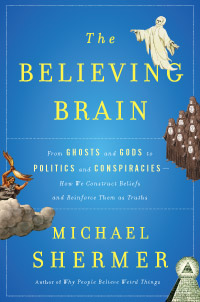
The Believing Brain
by Michael Shermer

If you've got a party that needs spoiling, Michael Shermer is your guy.

Michael Shermer's
The Believing Brain
This is not to cast Shermer with nefarious motives. I doubt the well-known skeptic and founder of the magazine of that name seeks to ruin anyone's fun with his latest work of analysis, The Believing Brain. The author is simply a man of science, and wishes everyone else could be, too.

But I must admit to feeling twinges of disappointment and sadness while I read Shermer's latest. I remember how much fun I had as a kid, reading books about hokum like the Loch Ness monster, Bigfoot, sea serpents, and ghosts. That stuff was, as Denzel Washington's Training Day character Alonzo Harris put it, "bullshit...but entertaining bullshit." Much as folks of all ages spice up their dull as dishwater lives with the imagined possibilities of science fiction, so too the more colorful products of pseudo-science help us retain a bit of that childlike wonder, some semblance of a belief that there's more to the world around us than the banality of everyday life.

To be fair, The Believing Brain is not simply a debunking report on those characters of our dreams (and not a few nightmares). Shermer has attacked such targets in previous works, notably the earlier book, Why People Believe Weird Things. This current work serves up a straightforward examination of how the human brain works; it is a discourse on the cognitive processes that lead us believe ideas both common, ordinary and demonstrable (that sound in the bushes might be a dangerous predator, so watch out) and odd, outrageous and unprovable (the aliens have already arrived and are ruling the world from behind the scenes). Shermer makes his strong case that, contrary to intuitive thought, our beliefs come first, then we use our cognitive biases to reinforce those beliefs, until we find ourselves well convinced of our hold on the "truth."

All well and good, for the psych student. But such discourse does not necessarily make compelling reading for the casual observer. Though Shermer is by now a seasoned pro at writing interesting, accessible, and often humorous prose, parts of The Believing Brain can be difficult to connect with. Some readers will find it easy to get lost in the author's descriptions of the various parts of the brain and their various functions in perception and belief building. While Shermer's account of his personal journey from believer to skeptic is instructive and quite readable, his descriptions of "patternicity" and "agenticity" may prove too technical for many to understand. Reading the early sections The Believing Brain gives you the distinct impression that you're slogging through a bunch of details in order to get to "the good stuff" later in the book.

There are, in fact, pieces of "good stuff" in the book's latter pages. Particularly intriguing is the discussion of Galileo's discoveries at the end of the Middle Ages, and how the reliance on authority so prevalent at the time led otherwise intelligent observers not to see the very objects so readily apparent in Galileo's telescope. (The story suggests obvious parallel's to today's conservatives--current society's arch-lovers of authority--and their obstinate disbelief in evolution, climate change, etc.) And Shermer's account of the debates among astrophysicists regarding the nature of the universe--arguments that ultimately led to Hubble's cosmological discoveries--stands as an eloquent exemplar of the value of the scientific method.

So you can learn a lot reading The Believing Brain. Particularly, you will learn a lot about the author himself. How the reader responds to the ideas presented in the book may depend not upon empirical evidence, but upon how you feel about Shermer. It's hard not to view Shermer himself as part of this equation; the book is littered with the author's imprimatur regarding his subject matter. Many terms of the discourse are categorized as "what I call..." terms; i.e., "we practice what I call 'agenticity'." One suspects that many of the terms so labeled in the book are not necessarily of Shermer's own coinage. Plus, numerous concepts in the text are fleshed out through examples from the author's own experience--particularly when it allows Shermer to recall one of his television appearances, or the marathon bike race he founded and participated in, or to educate his audience about his preference for libertarianism. In fact, a reader could readily draw the conclusion that the one thing Michael Shermer truly believes in is Michael Shermer. That perspective must necessarily color the reader's judgment of the arguments presented in The Believing Brain. Is that shading enough to invalidate the concepts presented in the text? Not in this reader's view; Shermer's arguments retain their validity, based on their own strength. But it's easy to see others having their judgment thrown by the author's somewhat obtrusive personality.

Overall, The Believing Brain succeeds on its own terms. It may not be everyone's cup of tea, but the strength of the scholarship and reasoned argument it presents is not easily refuted. If we all read this book, and were moved to question our own deeply held beliefs--even for a few moments--that would probably be a good thing.

Friday, November 19, 2010

Recently Read

A Short History Of Nearly Everything
by Bill Bryson

A solid, comprehensive work of popular science, covering a great range of subjects from the full breadth of cosmology to the narrowest confines of atoms, molecules and living cells. It's best for pure novices; someone with a basic knowledge of the sciences will see a lot of this material as old news. And Bryson has one stylistic weakness, a tendency to rely a little too much on synthesizing the conclusions of others (i.e., "According to so-and-so, '...' "). But there's enough original thought here, conveyed with clarity, humor, and wisdom, to make A Short History a worthwhile read for any layman with an interest in the universe around us. Worth a look.