Thursday, May 9, 2013

Recently Read

Life of Pi
By Yann Martel

How odd that I would read this book before seeing the movie. I guess my film viewing habits really have fallen off the table.

A more germane topic, however, concerns all this book wishes to tell us about life, and faith, and maybe truth--though that last one is highly debatable.

Author Yann Martel covers a lot of philosophical ground in Life of Pi, his somewhat spectacular story of, succinctly, a boy and a tiger on a boat. I say “somewhat spectacular,” because Martel’s ultimate storytelling gambit--which story is the “real” story?--actually winds up undercutting the impact of the trick he’s trying to play. If there had been one twist at the end of the book--some ambiguity in one aspect of Pi’s amazing journey, some distinct item that would provide a sharper, clearer “Aha!” moment for the reader--that might have served everyone’s needs rather well. But laying the entirety of the adventure on the line? I call that a bit of overreach, an act of authorial hubris that has too much potential to leave readers feeling excessively manipulated and to undo whatever good work Martel hoped to achieve. (I also happen to think he bungled the ambiguity; there are elements of the supposedly metaphorical story which, within the narrative’s reality, should have been easily verifiable one way or another.)

For me personally, “Life of Pi” shows another problem arises that highlights why, at this stage of my life, I find it so difficult to read fiction. Martel liberally sprinkles an encyclopedia’s worth of obscure knowledge--mostly, in this case, zoological knowledge--throughout Pi’s first-person narrative. It is exactly the kind of brazen authorial showboating that ruins fiction for me. Nonfiction works must be well-researched and extensively referenced, or else the author’s authority withers and perishes; but fiction has different demands. Showy displays of the author’s research may be good for attracting critical attention and awards--”Oooh, such extensive research you did--here, have a shiny object...”--but a writer who flamboyantly exhibits his research inevitably takes this reader out of the story. Here I am, reading a story, and then the esoterica drops: suddenly, I’m not reading a book--I’m staring at a Everest-sized pile of index cards (or the digital equivalent thereof). It’s a lot like watching a movie and seeing a boom mike that was accidentally left within the upper corner of the camera’s view; instantly, the illusion is broken, and I start to wonder about the competence of the person who put this thing together.

On the other hand, Martel deserves high praise for his skill as a prose stylist. Thanks to my own writing and editing work, I’ve developed a constant need to assess the quality of any text I read--especially when I’m reading fiction. But with “Life of Pi” my stylistic alarm bells almost never rang out loud. Martel crafts excellent--almost lyrical--prose. Without question, his literary skill is consummate and expert. In that sense, “Life of Pi” is a breath of fresh air versus other recent works, so many of which have been published seemingly without benefit of compositional skill or professional editing. From a ‘words on the page’ point of view, “Life of Pi” is a joy to read.

So we find a very mixed bag when we consider “Life of Pi.” The book has so many devoted fans that I doubt any critique by me would have much impact on how others feel about it. I should probably recommend this book for reasons of cultural literacy alone. But I do wish the author had not been guilty of literary overreach. A gesture made presumably to teach was, in the end, too grandiose to effectively instill its lesson. Martel may have felt that he needed something epic to get through to modern readers, but a smaller, subtler effort was all we really needed. Perhaps it would have been better if, as a guy trying to make a statement about faith, Martel had had a little more faith in us.

Saturday, May 4, 2013

Ace in the (Memory) Hole

I guess we really do change over the course of our lives. I recently had one example of my changing tastes/moods/whatever confront me in an unexpected way: I no longer listen to the Adam Carolla show.

This came as something of a surprise to me. I have been listening to Carolla regularly ever since the "Loveline" days back in the late '90s. I was on board from the start when the Aceman moved to morning radio back in the middle of the last decade, and I joined him on his post-firing journey into the new medium of podcasting--of which he has now become one of the leading impresarios, if not an actual new media mogul. I even read his first book. That's a long history as a relatively devoted follower.

True, I never bothered much with his television ventures like The Man Show or Crank Yankers (the former just never interested me, the latter--puppets acting out crank phone calls--should have passed without comment just for stupidity alone). And it is also true that I never kept pace with Carolla's output; once he moved his gig into downloadable territory, I invariably fell further and further behind the recent stuff, until my most recently listened to episodes were dated nearly a year behind the newest postings.

I guess that should have been a clue. Obviously, if I couldn't be bothered to listen frequently enough to keep current, the value must not have been all that great in my eyes (or, if you will, ears). Yet, I had been behind before, and made catch up efforts in the past. So why did I feel the need to abandon Carolla now?

My gut tells me to point the finger at the changes I've heard in Carolla's show in recent times. (I can't say how recent, because, remember, I was listening to year old shows by the time I pulled the plug.) For one thing, the promos just got overbearing; each episode of the podcast suffered from heavy intrusions of commercials for products that I would never bother buying. For the most part, I'm OK with someone making a buck for his efforts, particularly when he is supplying a product that has no price. But sometimes it seemed that the frequent commercials were damaging to the flow of the show, enough so to sap away the entertainment value. Let's face it: patience is a limited resource--test mine, or anyone else's, at our peril.

More troubling, perhaps, has been Carolla's ever-greater tilt towards right wing politics. One guest I recently heard on the show was some guy--I don't remember his name, and feel unmotivated to look it up, for obvious reasons--who wrote a book trashing the Occupy movement--a favorite target for Ace's ire. Carolla has long had a fairly conservative bent on many political issues (to be fair, he's relatively liberal on other, especially social, issues). I've heard him make comments with which I disagreed before--but, having done my own homework on Occupy and other issues, and knowing the fallacies embedded in Carolla's view of these issues, I found listening to his erroneous diatribes ever more tedious. Also, I started to suspect that some of his guests were not being booked "organically," but were coming at the direction of outside forces. (Carolla's affiliation with radio host Dennis Praeger may represent the nexus through which the "right wing echo machine" has recruited another outlet.) I can be forgiving when the intellectually lazy Adam Carolla forms a judgment that lacks a certain amount of depth; but I'll be damned if I'm going to be played for a sucker and drawn into listening to Fox News farm team players on the sly.

(An aside: Carolla's intelligence is a frequent butt of his jokes, but the man isn't dumb. He is, however, an untrained intelligence. Adam's strength lies in what he can diagnose through direct observation; anything that requires examination beyond surface details often leads him astray. That is the weakness that makes some of his rants tedious to listen to and undermines the show's quality.)

Perhaps worst of all, as the guest roster grew to include more junior league Hannity wannabes, fewer and fewer guests came on who really had something meaningful to offer. Comedians, once a staple of the show, largely faded from the guest roster. By the time I dropped my subscription to Carolla's show, it had been months since I had heard Dana Gould or Greg Fitzsimmons or any other comics on the show. While I get that it may not be possible to bring in one time staples like Joel McHale--he's grown too big for the show, of course--it would have helped immensely if Carolla's staff had made the effort to connect with the next round of up and coming entertainers, instead of bringing in people who just had a book to sell, or a political axe to grind (or most likely, both at the same time).

That lack of entertaining guests, I think, points to the tragic truth of why I had to dump Carolla's show: it had just gotten so boring. Each episode played out with such a sameness to it; the same rants, the same characterizations of the same people, a sameness to the tone of Alison Rosen's news...hell, even Bryan Bishop's drops--long an entertaining staple of the show--had grown repetitive and stale. The Adam Carolla Show has become, to use the hosts own oft-applied expression, fucked out.

Is there a larger implication in this act of mine? Probably not. I doubt that others are feeling the same way about the show as I do. The show still rides high on the iTunes charts, and once they're hooked, people will keep listening to/watching the same damn show for years regardless of quality. (For example, just look at all the ridiculously long-running series on TV these days.)

And now that I think about it, I'm not even sure my abandoning the ACS reflects any real change in myself beyond, perhaps, a sense that I no longer have time to waste on anything not really interesting to me. I don't seem to have missed the show since I formally stopped listening and deleted all the downloaded shows. (I have also deleted his website from my "Sausage Factory" at right; I can't in good conscience provide a link to a product I won't listen to myself.)

I guess all I'm really saying is, things change. A lesson none of us may have needed, but one that should not go unheeded. So it goes.

Sunday, March 24, 2013

Begging to Differ

Why the Miami Heat's winning streak is not all it's cracked up to be

I'm getting tired of this.

Once again, for reasons unknown, it falls to me to point out what should be obvious to everyone.

If you have the slightest interest in sports, and have not been living under a rock these past two months, you know that as of this writing, the Miami Heat have won 25 games in a row. And all the sports media types have been stumbling all over themselves to celebrate the team's apotheosis.

We haven't seen this much Kool-Aid imbibed since Georgetown, Guyana in '78.

Clearly, I'm not as impressed by this achievement as everyone else. The reasons for this should be obvious; unfortunately, we seem to have reached a point in human history where the obvious no longer catches the eye of anyone blessed with a media pulpit, so I will attempt to set the record straight and explain why this performance--while noteworthy and respectable--falls short of the Olympian heights to which the NBA's press flacks wish to raise it.

First, there is the matter of the Heat, who plays for the Heat, and how they got there. I discussed this issue nearly two years ago on this site (see Miami's Vice, from June 2011). All the points made in that essay remain very much in play to this day. It should be no wonder that the collusion worked by James, Wade, and Bosh--which (as I pointed out then) damaged the game's competitive balance--would lead to this kind of result down the road. How do you expect other teams to compete against the squad that has hoarded a plurality of the league's best players? It stands to simple reason that the hoarding team will be able to dominate its competition to an exaggerated degree. The only thing exceptional about winning 25 games in a row is the fact that the streaking team has refused to take a night off and mail one in for such a long stretch of the schedule.

And remember, James and Bosh came to the Heat from other Eastern Conference teams (Cleveland and Toronto, respectively). No surprise then that the moves that weakened those two franchises would pay dividends down the road for the stars' new team. And, indeed, four of the Heat's 25 consecutive wins came against the two teams abandoned by Miami's prized additions.

That, of course, reflects a larger reality within the Heat's winning streak: beating up on Eastern Conference teams. The Heat, in winning their 25 games, have done so against only eight Western Conference teams (one game apiece against each of those teams). And of those Western teams, only five would make the playoffs today (Minnesota, Portland, and Sacramento are on the outside looking in, and will almost certainly remain there). That leaves 17 wins collected against the teams of the notoriously weaker Eastern Conference. Only six of those games against Eastern teams featured squads in playoff position.

So when we break down those 25 wins, we find that only 11 of those victories came against good teams. And, as noted before, there's a dearth of solid competition in the league because...hello!...most of the best players play for the Heat.

One game that many thought might snap the streak, against the Celtics on March 18, proved to be challenging but ultimately victorious for Miami. Perhaps Boston could have put up a better fight if the injured Kevin Garnett had played in the game. Or maybe the Celtics could have prevailed if they had kept one of their recent star players, Ray Allen, on the team. Of course, Allen now plays for...wait for it...the Miami Heat.

Thus, it's no surprise that the Heat, having plucked several of the best players away from their competition, are now dominating that rest of the league.

As they say on late night TV ads, "But wait...there's more!"

One of the favorite lines of hype, employed by the media lickspittles when waxing poetic about Miami's streak, is how the Heat are achieving something "historic" in winning this many games in a row. In more than one sense, this is true--but not necessarily in the way these pundits mean.

That the Heat have achieved the second longest winning streak in NBA history is undeniable. If they match or beat the Lakers' record 33 game streak, that will be a laudable accomplishment. The streak's value will be debatable (see above), especially if the team does not win the championship in June. But the trouble with this winning run is that it serves as yet more evidence that the NBA has a problem with delivering a truly competitive sport.

The game's history shows that dominance by one team (or, at best, two teams) during a given period of NBA history is not an anomaly--it is very much the norm. In the very beginning (during the late 1940s and early 1950s), the Minneapolis Lakers repeatedly prevailed. Eventually, the Celtics took the mantle and ran with it (championships consecutively from 1959 to 1967, with three other wins bookending the run). After the interregnum of the 1970s (when the title changed hands frequently among several teams, probably because of the competing presence of the ABA), we had the NBA's alleged Golden Age in the 1980s, when every championship except two was won by either the Lakers or the Celtics (only Philadelphia in '83 and Detroit in '89 crashed the two-team party). During the '80s, only five teams even played in the Finals. The 1990s saw six championships for the Bulls--a streak broken only because of Michael Jordan's fanciful two-year excursion through baseball's minor leagues. Competition during recent years has been slightly more open, but the turn of the 21st century still saw the Lakers add five titles in eleven years (and they lost two other Finals in the same period).

Noticing a pattern here? The history of the NBA can be summed up simply: flat out dominance by (usually) one team. Again and again, one team in the league has stood head and shoulders above the rest, often for years at a time. That such supremacy has not resulted in lengthy winning streaks more often should probably be chalked up more to fluke than a level playing field. Past teams, just as dominant as the Heat in today's NBA, may have taken their foot off the gas to rest up for the playoffs, rather than go all out looking to etch their names into the record books. Or perhaps, back in the day when the competition was better, they never got rolling on a long streak to begin with.

However the details may have played out, history shows that the Heat's standing within the league is not something exceptional and rare, but is in fact par for the course.

Indeed, seeing Miami dominate the league to this extent, and recognizing the flaws in the rest of the league that have helped create this streak, actually works to downgrade the accomplishments of past teams. That championship run forged by the Celtics in the '60s has always had a mythic aura to it; we've come to view that achievement as something almost herculean in scope, as heroic as any deeds reported in the Illiad or the Odyssey. But when viewed with a more jaundiced eye, when analyzed via the intelligence that has been honed by studying the causes and effects of the Heat's run, the shining victories of the past start to dim. Such superiority is simply what always happens in the NBA.

All of this truth telling comes from fairly straightforward analysis that can be done even by amateur sportswriters such as myself. No particular secret wisdom is required to see what there is to see in Miami's streak, and thus to keep the hyperventilating to a minimum. Instead, we get hysterical hype, ad nauseum. This failing by the sports media echoes the blindness we saw a few years ago--those same shortcomings I called out in the post referenced above. Those failings may ultimately prove to be one of the truest legacies of LeBron James's career: his actions, his team's exploits, have provided a backdrop against which the shallowness, the amateurism, the outright incompetence of what is currently alleged to be sports journalism have been exposed.

Sports fans deserve true reporting and insightful analysis; instead, all they get are shameless shills and hagiography. The Heat may keep winning; but the sports fans will continue to lose when it comes to what they get from the people reporting on the games.

Reel Reviews

Captain America: The First Avenger (+) -- This may very well be the most comic book of all comic book movies ever made; you can practically see the panels and the block lettering. Some of the action sequences are among the most audacious I've ever laid eyes on, and that helps; so too does the almost atomic perfection of the recreation of the period setting. The script even pokes fun at what is obviously a fairly ridiculous, propagandistic character, and then takes all the right steps to redeem him and make him worth cheering for. Nice work. Posted 3/24/13.

Thursday, March 21, 2013

Recently Read

A twofer for one of my favorite authors!

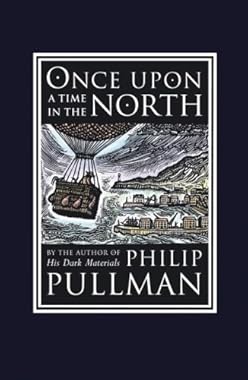
Once Upon a Time in the North
by Philip Pullman

It's been such a long time since I've had the chance to dig into anything by Philip Pullman. Part of the blame falls with me, as I've been wandering further afield, and part must fall on Pullman, who has been lax lately when it comes to producing works that just scream "Read me!" (More on this matter below.)

Once Upon A Time In The North
by Phillip Pullman
Here's a case in point: the novella Once Upon a Time in the North, the second short story entry into the His Dark Materials canon (the first being Lyra's Oxford). Since the HDM books were the magnet that drew me to Pullman in the first place, and still retain their place in my pantheon of favorite books, I felt true delight when I discovered (thanks to a library catalog search) that there was another addition to the series. Add in the fact that it's a story focused on the early career of Lee Scoresby and his soul-mate hare Hester--two of the best characters in the original trilogy--and I was ticked a ruddy shade of pink.

And Once Upon a Time in the North delivers the goods: the witty Texan Scoresby and his snap-tounged Hester are in fine form this quick moving adventure tale of a couple of hairy (harey?) days in an Arctic town. It is a delight to spend a few more minutes with Lee and Hester, who are characters a reader wants to follow anywhere: brave, smart, able, and only lightly touched by a non-incapacitating cynicism.

Unfortunately, minutes are all we get here. While brevity may be the soul of wit, and 96 small pages do serve to tell the story of the pair's involvement in a bit of local politics--with a touch of mayhem and potential murder thrown in to keep things exciting--the ultimate outcome is to leave the reader wanting so much more. It seems unlikely that we're going to get more; Pullman produced Once Upon a Time... back in 2008, and the HDM trail seems, in the intervening years, to have grown colder than Iorek Byrnison's Arctic homeland. The failure of the film version of The Golden Compass may have made that inevitable; perhaps Pullman has pulled up creative stakes and headed for greener literary pastures.

Still, Once Upon a Time... demonstrates how robust and rich a source the HDM world could still be, if the author is so inclined. Other characters from the original work could have their own past/origin stories brought to fruition and presented to an eager reading public. And for those who are not already fans, Once Upon a Time...  (or similar series-based novellas) could serve as a terrific intro to the wider works: a brief, excellent, entertaining entryway for those not already familiar with just how good Pullman and his work can be.

At the very least, I am grateful I had the chance to get a little more joy from one of my most loved literary adventures. And I'll welcome any more chances to reenter that world, should they come down the line.


The Good Man Jesus and the Scoundrel Christ
by Philip Pullman

News flash: Philip Pullman is not a fan of Christianity, or organized religion, or "the Church," however you want to put it.

So why, then, did he decide to write a Gospel?

Whatever the motivation, Pullman's impulse led to the publication of The Good Man Jesus and the Scoundrel Christ, the author's attempt to reconcile what he perceives to be the admirable qualities of Jesus's message with his personal world view--and the anathema status that the Church has within that world view.

The Good Man Jesus
and the Scoundrel Christ

by Philip Pullman
Pullman tries to pull this split personality trick by cleaving the Savior himself into two separate characters: Jesus, who is more or less the traditional prophet most of us have come to know, and Christ, the other's younger, sicklier, shrewder, and somewhat more contemptible twin brother. Throughout the narrative, Jesus goes about living his life as described in the canonical Gospels, while the brother Christ shifts about on the periphery of the "greatest story," serving as both scribe and secret mover of the action, both by his own volition and through collaboration with "the Stranger"--a mysterious character who may or may not ultimately turn out to be the Apostle Paul. (Pullman hints, but never comes right out and identifies who the Stranger actually is supposed to be.)

Naturally, this manipulation of the story causes problems for the reader, especially those who are familiar with the standard story (which is to say, virtually everyone in two thirds of the world, at least). Jesus, in most respects, comes across as a character worth rooting for; but Christ is presented much more ambiguously. The character never seems like an organic creation; from the start we are highly conscious that we are reading the tale of a literary device. Despite his titular appellation, and a story thread that obviously implies plenty of envy, Christ has admirable qualities, too. Too bad, then, that the character ultimately comes across as a stooge who serves the narrative role of the slightly reluctant tool by whose deeds the Christian Church is to be founded.

It is for that sin--being the necessary component in the Stranger's machinations to found an organized religion--that Pullman ultimately damns his own creation. Conversations between Christ and the Stranger, concerning the philosophical underpinnings of the Church, and why it must be founded upon lies, read like wiretap transcripts of racketeers caught in the midst of their conspiracies. When at last Christ, long after the unfortunate events, voices his pain and regret, the reader has little clue about how he should feel for this made up man.

Not only does the plotting suffer at the hands of Pullman's ulterior cause, but the author's own writing comes across as damaged by his agenda. Some passages retain their power, despite Pullman's tinkering with story, character and meaning. The Sermon on the Mount can still inspire and move the reader, even when presented in the author's purposefully banal language. (Much of this work comes across as a new, revised version of The Book, that laughably lowbrow version of the Bible that came out back in the 1980s.) In a few places, the author's talent still shines through, as with the very subtle manipulations that cast more than a little doubt upon Mary's pre-motherhood purity. At other times, however, Pullman's text degenerates into little more than philosophical screed. Nowhere is this more evident than in the Garden of Gethsemane, where Jesus has a one way conversation with God that neatly refutes every word of Christ's and the Stranger's conceptual architecture for building a Church. The reader knows with absolute certainty that these words are Pullman's, with no attempt made to portray them as anything that might have sprung from Jesus's own philosophy. If you were at a pub talking religion, or lack thereof, with the author over a pint, such direct personal opinion might be accepted and welcome. But when the author is trying to make his own ideas into those of a character many consider to be the Son of God, it's fair for the reader to accuse him of being a little full of himself--especially when the presentation of those ideas makes for less than riveting reading.

I am a fully confessed Pullman fan. I have delighted in any number of his works. So I expected to come to The Good Man Jesus and the Scoundrel Christ and find an admirable work. Even as I read the book, I figured that the work would merit a "so-so" (~) review once I got around to posting it on this site. But in retrospect, I can not view this book as anything but a failure; perhaps a noble failure, but even that is questionable. And considering the successes that have come before this work, it would be the worst kind of "grade inflation" to give Pullman a pass for this effort. If you too are a Pullman fan, one with a completist bent, or someone whose interest in interpretations of the Christian story is limitless, then I suppose you will want to read The Good Man Jesus and the Scoundrel Christ. Otherwise, the not so good news is, you can skip it.

Friday, March 1, 2013

Reel Reviews -- Y

Yojimbo (+) -- A wonderful movie, more than worthy of being the inspiration for one of the classic westerns, A Fistful Of Dollars. The best part has to be Toshiro Mifune's towering performance as the out of work samurai--the original man with no name--who plays the rival factions like a concert violin. Certainly a classic, probably would be a Best Of All inductee, were I truly equipped to judge the nuances of Japanese movie culture. Don't miss it. Posted 9/7/04.

You Can Count On Me (~) -- It has its moments, but most of it is fairly obvious. Laura Linney (Oscar-nominated) is good, but Mark Ruffalo is better. A "not quite" movie. Posted 10/1/02.

Young Adult (+) -- I enjoyed watching Patton Oswalt play reluctant Sancho Panza to Charlize Theron's demented Don Quixote. And, with the exception of one major misstep towards the end, the movie remains refreshingly, brutally honest throughout. It certainly provides a fine meditation on who lives 'those lives,' if you know what I mean, so if you're prone to that sort of thinking anyway, check this one out. Posted 3/1/13.

You've Got Mail
(+) -- I'm tempted to write this thing off for being a blatant and obvious advertisment for the shitheads at AOL, but the combination of Meg Ryan, Tom Hanks and director Nora Ephron works well enough for forgiveness. Funny and charming, though ultimately a bit depressing in its "there's no room for the little guy" philosophy.

Monday, February 18, 2013

Recently Read

Summer of '68
by Tim Wendel

It happens every year. The winter months come, the last baseball season is left far behind, and I get the itch for the game to come back. So I usually try to jump that gun and bring baseball back, a little earlier than scheduled, by picking up one of the many works of literature devoted to the game. It's not exactly a day at the ballpark, but reading a good book about baseball will do in a pinch.

Summer of '68 by Tim Wendel
So it came to pass that, on a recent trip to the local library, I picked up Summer of '68, an account of the legendary "Year of the Pitcher" by longtime sportswriter Tim Wendel.

Just based on the title alone, this book held enormous promise. It is an account of 1968, that most famous year both in baseball (the last year before division play, the year when true giants stood atop the mound, the year before everything changed) and beyond (a year of unprecedented upheaval, with assassinations, demonstrations, riots, Olympics, and elections...not to mention my own birth, during game 6 of that year's World Series). As with other such baseball books--accounts of one particular, stand-out year in the game's history (Halberstam's October 1964 and Summer of '49 immediately spring to mind)--Summer of '68 comes with the built in advantage of a narrative already created and neatly packed; all the author needs to do is dig into the details and tease out the hidden side of the already well-known story to bring the reader a fascinating and refreshing experience of days--and the game--gone by. Given that standard, Summer of '68 is a win--but it's not a blowout win by any means.

After all, it's hard to go wrong when your chief subjects are the 1968 St. Louis Cardinals and Detroit Tigers: two teams full of larger than life characters who matched up against each other in that year's World Series. The tale of Bob Gibson's dominance on the mound, fueled in part by his reaction to the King and Kennedy assassinations, makes for deeply interesting reading. So too with the carnival show that was Denny McLain, winning 31 games at the height of his career; Mickey Lolich, overcoming adversity, doubt, and envy to stand in the end as the Series hero; Curt Flood, the game's best centerfielder who still had his greatest challenges ahead of him; Tigers legend Al Kaline, capping a Hall of Fame career with an exhibition of true greatness on the game's biggest stage; and...well, the list goes on and on. Great stories abounded on those two teams, not to mention the fascinating tales that peppered the major leagues outside of those two cities (Don Drysdale, Catfish Hunter, Frank Howard, Milt Pappas, Luis Tiant, and more). Almost any writer could produce an interesting book with such characters and their deeds as his subject.

And yet, Summer of '68 never quite caught fire for me, despite its glorious subject matter. The blame for that lack of intensity must lay in author Wendel's shortcomings as a writer. Perhaps it is telling that Wendel, according to his bio, was a founding editor of USA Today; Wendel's writing in Summer of '68 mirrors the blandness of that 'least common denominator' publication. The author is just not much of a stylist; his prose is flat and uninspiring, and that deficiency bleeds some of the drama out of otherwise fascinating characters and scenes. Much of the narrative is choppy, and comes across as less a flowing, unified work and more a quilt of disparate texts cobbled together from unrelated articles. (The reader gets the impression that large parts of Summer of '68 were pieced together from previously published works, though there are no 'previously published' credits anywhere in the book's cataloging info.) The writing also contains many stylistic faults, such as needless identifications and explanations of things already identified and explained--small flubs that are individually forgivable, but pervasive enough to be distracting. All in all, Summer of '68 suffers greatly from burdens that are almost more than its grand subject matter can overcome.

That the book does overcome those burdens, just enough to make the reader want to keep going forward, is a testament to the work's core story. What the Tigers and Cardinals accomplished in 1968, and the maelstrom in which they achieved their greatness, makes for a story too intriguing to be sidetracked by the presentation's failings. In a perfect world, this story would have gotten a better treatment by a truly gifted writer; as it stands, baseball fans can make do with Summer of '68 and honor the memory of what were truly legendary days.

Monday, January 21, 2013

Reel Reviews -- X

The X-Files: Fight The Future (+) -- Definitely worth it if you're a fan of the show; otherwise, it's tough to say. I'm a fan, so I say "see it." It feels a lot like just a big episode of the show, but again, if you like the show...

X-Men (+) -- Well-done comic book adaptation. Some of the mutant powers are a bit on the outlandish side, but hey, you're not supposed to believe in this shit. Patrick Stewart and Ian McKellan provide just the right touch of gravitas to an otherwise popcorn-light movie.

X-Men: First Class (+) -- Lots of fun. True, lots of silly, profoundly implausible fun, but for what it is--a backdrop that plays while you munch away at your grain-silo-sized tub of popcorn--the movie performs its task admirably. There's plenty of easy on the eyes--certainly for the male viewer; probably for the female viewer, too, though I'm not one to judge that--and a good dose of cool visuals (nice but not overbearing special effects included), and an easy, comfortable attitude about the materials that more than makes up for the profound absurdity of the base premise. And, of course, Nazis with submarines; you never go wrong with Nazis with submarines. Wrap it all up and it's worth a couple of your hours. Posted 1/21/13.

X2: X-Men United (+) -- Ah, I'm such a sucker for anything that reeks of "cool." Throw some special effects in front of me and I'm happy. I have a feeling I should have liked this movie less than I did, but I certainly don't think there was anything egregiously wrong with it. There's a subplot about a particularly religious mutant that opens the doors to a lot of speculation, but they left it thoroughly undeveloped. Too bad. You have to settle for fairly run of the mill sci-fi superhero stuff. Still, that's usually entertaining--and so it is here. Posted 2/12/05.

Right About The Big Things

I like to say that I'm always right. No one ever believes me, but I'm always right. Of course, I'm not right about every detail of what passes in this world, but I get the big picture right a lot of the time.

Witness this post, from almost two years ago. I was spot on when I called the selection of Colin Kaepernick the turning point for the 49ers' future. As it turns out, it wasn't quite a direct line from that day to the Super Bowl, but the team did eventually get there. For the record, despite that post, I was not an advocate for replacing Alex Smith with the kid halfway through this season; I figured it was better to stick with Smith for the present, then hand the keys over to Kaepernick for next season. But I was wrong about that; Harbaugh made the right call.

And, as it turned out, I was right about the heart of the matter: the 49ers have returned to glory, as they say, and Kaepernick is a huge part of that. So please, listen to me once in a while when I tell you something.

Monday, December 31, 2012

Taylor's Laws

Note: Taylor's Laws--or variously, Rules, Principles, Axioms, Whatevers--are a series of Laws of Nature and Life as promulgated by yours truly (a la Stephen's Dictionary for words and phrases). I hope to make this a semi-regular feature of Malchats Matters, and possibly to produce a compendium when I have enough Laws formulated.

Taylor's Principle of Pizza Purchasing

Always buy as much pizza as your available funds will allow.

Explication: You always want to maximize the value of your money. Buying as much pizza as your available funds allows will accomplish this. Pizza, in any amount, will always get eaten. Cold pizza is almost as good as fresh out of the oven pizza, so leftovers are always welcome. It will not go bad, even if left sitting in its box for a couple of days (it will rarely achieve that long a shelf life). Thus, every dollar you spend on pizza goes to making a meal--usually a couple of meals. Whatever is the best 'buy in bulk' price that your local pizza joint offers, go for it.

Saturday, December 15, 2012

Recently Read

Into the American Woods
by James H. Merrell
Into the American Woods:
Negotiators on the Pennsylvania Frontier

by James H. Merrell

I was completely deceived by this book's title. I put it on my reading list under the belief that this was a work of natural history about the great forests that covered the American continent back in the day. It would have helped if I had kept reading until I came to the subtitle...

But this turned out not to be a problem. What I accidentally discovered was a book on colonial history that I would not have otherwise selected, and that happy accident led to an enjoyable reading experience I would not otherwise have had.

Author James H. Merrell tells the intriguing story of the "negotiators on the Pennsylvania frontier"--those souls who, for one reason or another, straddled the worlds of the native Indians of mid-Atlantic river valleys and the early British colonists who were the first founders of "Penn's Woods." As the author tells it, trying to bridge the gap between those peoples was an enormous undertaking, one so fraught with difficulty that even those involved in the task were often in the thick of it against their will. That motley mixture--of half-breeds, inter-marriers, and hustlers on the make for trade and land speculation--proved to be invaluable for the peoples in the Delaware and Susquehanna valleys in the years from (roughly) 1680 to 1760; it was only through the shrewdness and diplomatic skill of the go-betweens that William Penn's original vision of a "peaceable kingdom" of mutual brotherhood between the natives and the colonists ever came close to being realized.

Except, of course, it never really was realized. By the end of that eighty year span, despite the best efforts of the negotiators, the fits and starts of peace and aggression between the two parties had degenerated into brutal frontier war. That conflict, played out as one theater of the wider Seven Years/French and Indian War, helped set the archetypal course of American history--Indians fighting for their lives and land before ultimate dispossession by the ever-growing hordes of European immigrants.

Merrell's history provides an interesting perspective on all elements of this archetypal story. The characters on display run the full gamut, from noble stalwarts to foolish clowns and everyone in between. Occasionally, the story moves towards high comedy, as vignettes about some drunken Indian leader or peevish colonial official bring moments of true mirth. More often than not, though, this is a sad tale, one that tugs at the soul of the reader, who is confronted by tragedy again and again in the slaughter of families, the sacking of homes and fields, the dispossession (often by fraud) of the natives of their longtime birthrights, and the slow erosion of peoples and their way of life. Reading Into the American Woods can be an especially sobering experience for someone, like myself, who is a native of Penn's Woods (though the Philadelphia where I was born bore hardly any resemblance to the place known as Shackamaxon, where Penn held his famous council with the local Delawares back in the day). Again and again, while reading this book, I felt a longing to live up to Penn's dream and do something to bring that dreamed of harmony closer to reality. But whatever actions I or anyone else may take now, the sorrows of the past cannot be undone.

It is, then, the least we can do, to remember what was and move forward with that knowledge. Merrell's work helps move us towards that goal, and thus should be read and appreciated. Certainly, readers with a hunger for historical knowledge should pick up Into the American Woods. And though it is a scholarly work, and perhaps not everyone's cup of tea, it wouldn't hurt even the casual reader to give these pages a look as well. If nothing else, reading this book might drive home a point that has widespread application in all places and times: it is communication, or the breakdown thereof, that can decide the fate of peoples, nations--almost everything. If we all learn that lesson, maybe the "peaceable kingdom" will finally come to pass.

Thursday, October 25, 2012

No Contest: The Real World Wins Hands Down

Lately, I've been on a run selling my old CDs--not because I've grown tired of my music, but because I no longer have the space to accommodate 100+ discs and their containers. At first I went the online route, selling my discs via sites like "selldvdsonline.com" and "mx123.com." (I'll name them, but I won't provide links, for reasons that will become obvious below.) I thought using the online sites would be an advantage to me: you enter the disc's bar code for pricing, so you know right away whether a disc will sell or not--no lugging any duds to the store; the online vendors pay for shipping, so it's just a case of packaging the order up and getting to the post office; and (important for people-shy types like myself) you don't have to deal with any of the music store weirdos face to face. Seemed like a good way to go.

The mad monk is your friend
Alas, not so much. While it is true that I was ultimately able to make approximately $37 selling old, unwanted CDs online, the process was a pain in the ass.

Many CDs were rejected out of hand, because the bar code did not show up in the vendor's database.

Packaging the orders meant finding a suitable box, packing the discs properly, and securely sealing the box--and then I still had to get the thing to the post office. Not horrendous, but still a pain.

But those issues paled in comparison to the actual process of completing the sale. The worst indignities came after the vendor received the order. Of four separate orders sent by me, three of them had "problems" according to the vendors.

In two cases out of three orders sent to selldvdsonline.com, the vendor informed me that a disc was "missing" from my order. This despite the fact that, by their own assessment, the package seemed undamaged, and I certainly had no spare discs lying around at home. I was particularly assiduous about double-checking the order after the first "missing" disc issue. The fact is, I KNOW that each order included all of the intended discs. But who's going to haggle--long distance--over 25¢? In both cases, the payment I received was marked down by the value of the "missing" discs.

Worst of all was my experience with the execrable mx123.com. It took almost 10 days for them to acknowledge receipt of my order. After several days with no payment, I had to nudge them via email. This led to a response telling me that my order had "quality" problems, that several of the prices for my discs would be marked down because the discs or packaging did not meet their standards. (Funny, the other place never had a problem with the quality of my discs.) Again, I was told I would be paid "within 3 business days." It was only after the fourth business day, when I was ready to send another, considerably angrier email, that I received my payment. And finally, to add insult upon insult, my payment was reduced by 57¢ for PayPal's transaction fee. (None of the other payments from the other site--or indeed, any other payment I've ever received via PayPal--had a fee deducted from them.) I feel lucky to have gotten away with any money at all from those turds.

Contrast those experiences with what I got when I took two grocery bags full of CDs to my nearest Rasputin outlet. I had some trepidation about taking a big chunk of my music collection into the store at once, but two paper grocery bags full of discs (had to be about 70-80 CDs all told) was no problem for them. I had to wait while the (very friendly) clerk went through my discs one by one to assess prices, but the experience wasn't at all uncomfortable. Ultimately, I was offered $55 cash for my discs--without any of them rejected for "quality" reasons. (They offered $63 store credit, but I didn't take that, since I had other things to buy.) The entire process, including the drive to the store, probably took no more than 45 minutes, I got rid of my CDs, and I walked out of the store with $55 cash.

It was no contest: the real life, bricks and mortar, actual building on the street Rasputin store won hands down over the online outlets. I only wish I'd gone there sooner. If you find yourself in the same situation, got some music or movies or such that you'd like to sell, give your local store a shot. You'll be glad you did.

Saturday, October 13, 2012

For The Record, Scale Check

284.0 pounds

This shot actually dates to last month, September 13 to be exact. I've been lazy about posting it, though I intended to upload it as soon as I took the shot. I'm posting this to create a date/time stamped record of my weight, and will do so periodically in the future to keep track of my downward progress. (I'm not going to bother posting weight gains; the point of this is milestones on the downward march.)

Check back again later for further milestones as they are achieved.

Thursday, September 6, 2012

Recently Read

Fat Land
by Greg Critser

We're in deep trouble. But we can still do something about it. Maybe. That seems to be the takeaway from Greg Critser's book Fat Land.

Critser explores all aspects of America's growing obesity problem, in mostly chronological order: from the 1970s and former Nixon and Ford Secretary of Agriculture Earl Butz's pet projects for lowering the price of food--mostly through opening up markets to the cheap and then-new ingredients high fructose corn syrup and palm oil--to the degradation of physical fitness standards via defunded schools and hypersensitive parents, to the muddled confusion produced by nutrition science and dietary standards, and finally all the way up to the socioeconomic forces that have made fat--as I have said myself, here on this very site--into a class issue in modern America.

fat land
Fat Land
by Greg Critser
As a survey of all things obesity related, Fat Land is well-thought out, comprehensive in scope, informative, and sympathetic to plight faced by those of us who are carrying more than our share of pounds. Critser does lay blame where it belongs--including all of us in this population who have allowed our attitudes towards diet and exercise to degenerate in such an unhealthy fashion--but he also spells out the case that many obesity sufferers are indeed victims of societal circumstances. In today's U.S.A., it has become almost impossible NOT to be overweight if you have any genetic inclination towards holding onto the pounds.

In the book's final chapter, Critser presents ideas for actions that we, as a society, can take to ameliorate, if not reverse entirely, the obesity epidemic. For example, the suggestion that young college graduates could be recruited through Americorps to attack the problem in the schools, amongst the youngest victims of the crisis--in the same way such graduates have been sent out to alleviate kids' problems learning math--is intriguing, and should get serious consideration. But, given all that has gone in the preceding pages, the reader is left to wonder how effective such steps can be. After all, Fat Land was published nine years ago; not much has happened in the ensuing years to make the overweight problem any better. Suggestions for improvements have been falling on deaf ears, or upon ears that are blocked or covered up by the moneyed interests (think McDonald's, Burger King, soda companies, et al.) who have been the chief beneficiaries of the obesity explosion. We, as a society, are in thrall to the very forces that have been expanding our waistlines; Critser quite effectively makes that case, and thus it is no surprise that remedial efforts have been largely useless.

Still, we all do have at least the personal, individual solution to weight problems available to us: stop eating poorly, and exercise a lot more. Fat Land may not spell out the regimen that will get the best results for you, but it presents a clear argument that, for each of us--and especially those with a high BMI--the effort is undoubtedly worth it.

Thursday, August 16, 2012

Recently Read

Unusually Stupid Americans
by Kathryn Petras and Ross Petras

I'm on a losing streak--there's no denying that.

What else to make of Unusually Stupid Americans, the second entry in my quest for some lighthearted Summer reading? As with my first choice, the lamentable tome The Areas of My Expertise by John Hodgman--a book so dull and disappointing I actually forgot to post my written review of it--my second grab for a literary breeze proved to be a dud.

Unusually Stupid Americans features "a compendium of all-American stupidity"; that is, it's a collection of infotainment items gathered together under several vague topic headings (government, business, food, etc.) and presented for the reader's amusement, in bite-sized morsels. It's a well-worn concept, seen repeatedly in many published works of humor, one which promises lots of laughs without much effort on either side of the equation (reader or author).

On the plus side, the book is not hard to read; no slogging through difficult passages required here. And at least some of the items presented here are silly enough to draw out a guffaw or two.

But not nearly enough of those items are that funny. Worse still, the text is presented with a heaping helping of snark; authors Kathryn and Ross Petras (they're siblings) lay on thick their contempt for their subjects. That would be all well and good if their own contributions amounted to the height of wit and intelligence. Unfortunately, their text presents the reader with little more than boilerplate commentary on the stupidities on display--writing on a par with the humor column of a once a week small town newspaper, with all the banality that implies.

Thus, a book that should have taken a day and a half to read ended up sitting in my bedroom for weeks. But at least I get to get rid of it when I return it to the library. If the local branch is not particularly assiduous about weeding the collection, then--based on its merits--Unusually Stupid Americans may remain on the shelves there, unmoved and unread, for years. Maybe decades. Maybe until the pages rot away to dust. And who will be stupid ones then?